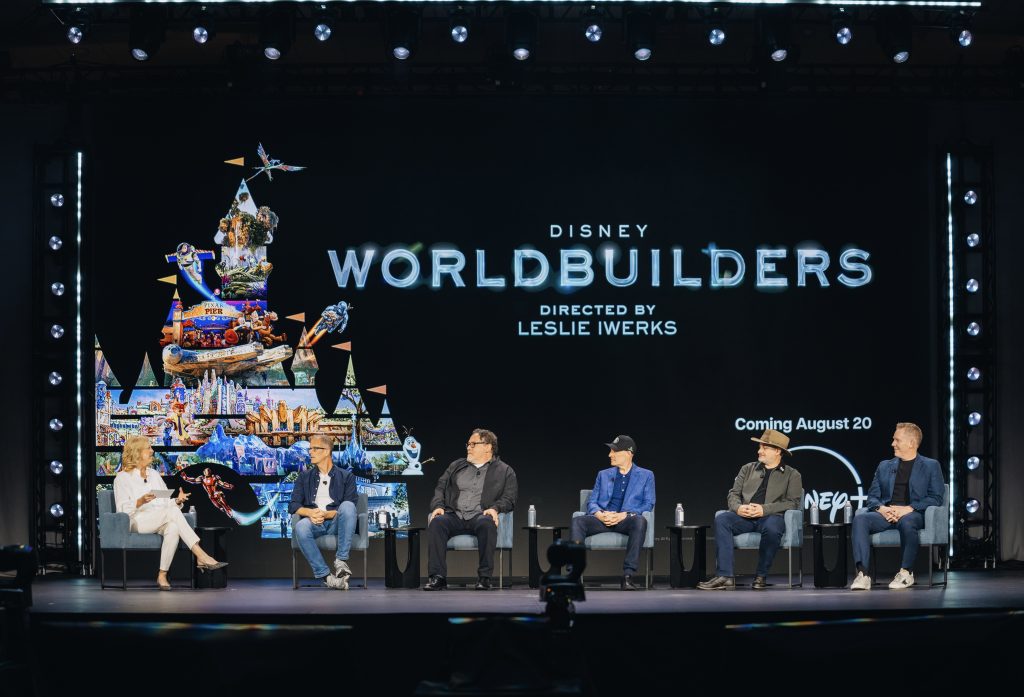
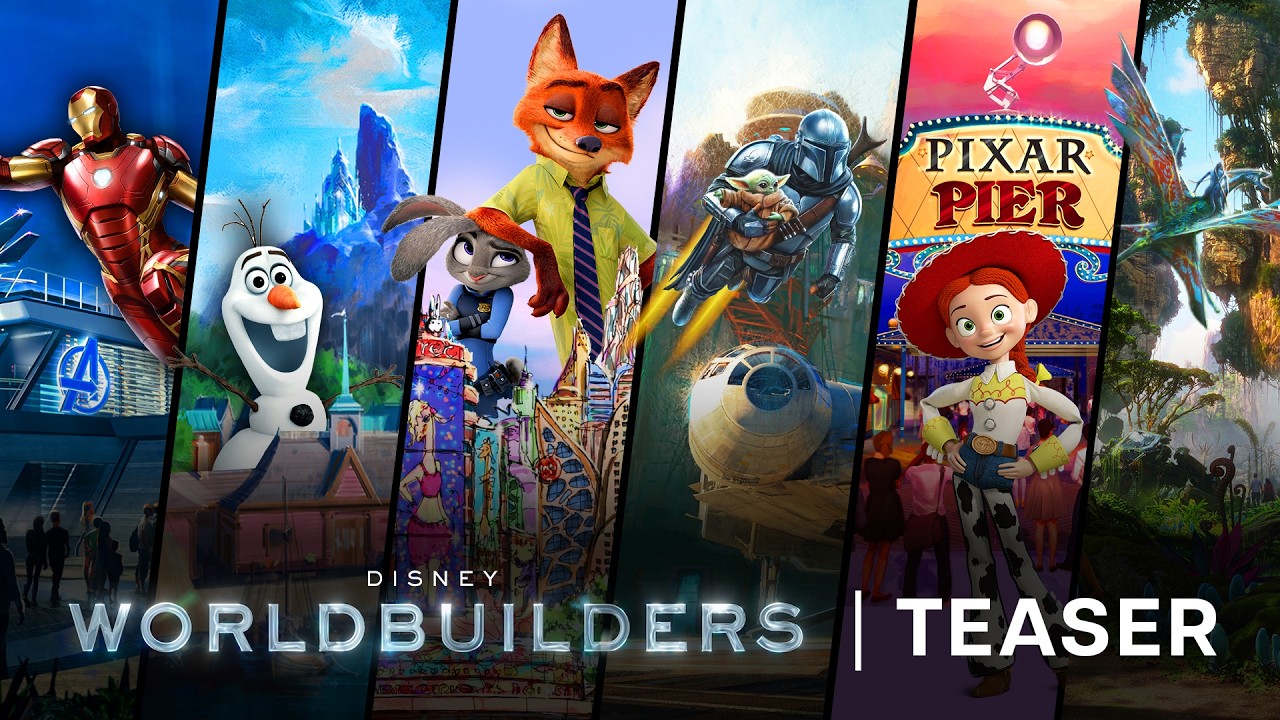
At D23: The Ultimate Disney Fan Event this past weekend, five of Disney’s most influential storytellers took the stage to unpack Disney Worldbuilders, the new film from director Leslie Iwerks arriving Thursday on Disney+.
In a wide-ranging conversation (which is currently streaming on Disney+), Iwerks — the Academy Award®- and Emmy®-nominated filmmaker, granddaughter of Disney Legend Ub Iwerks, and daughter of Disney Legend Don Iwerks — was joined by Pete Docter, Chief Creative Officer of Pixar; Jon Favreau, director of Star Wars: The Mandalorian and Grogu; Kevin Feige, President, Marvel Studios, and Chief Creative Officer, Marvel; Dave Filoni, President and Chief Creative Officer of Lucasfilm; and Jared Bush, Chief Creative Officer of Walt Disney Animation Studios.
Together, they revealed how The Walt Disney Company turns world-class storytelling into places you can step into and experience for yourself.
Streaming Now
Disney Worldbuilders
In “Disney Worldbuilders,” acclaimed filmmaker Leslie Iwerks sits down with creative leaders from across Disney to reveal what makes it so special.
The Story Doesn’t End
Josh D’Amaro, CEO of The Walt Disney Company, said opening the panel that “a great story doesn’t end when the credits roll.”
“It just keeps going and going, because a place that you can actually walk into, something that you can experience and share with those closest to you, is incredibly special. That idea is what makes Disney so unique,” D’Amaro continued. “And it only works because of the people who pour themselves into it. It’s the storytellers, the filmmakers, our imagineers, and our cast members all around the world.”
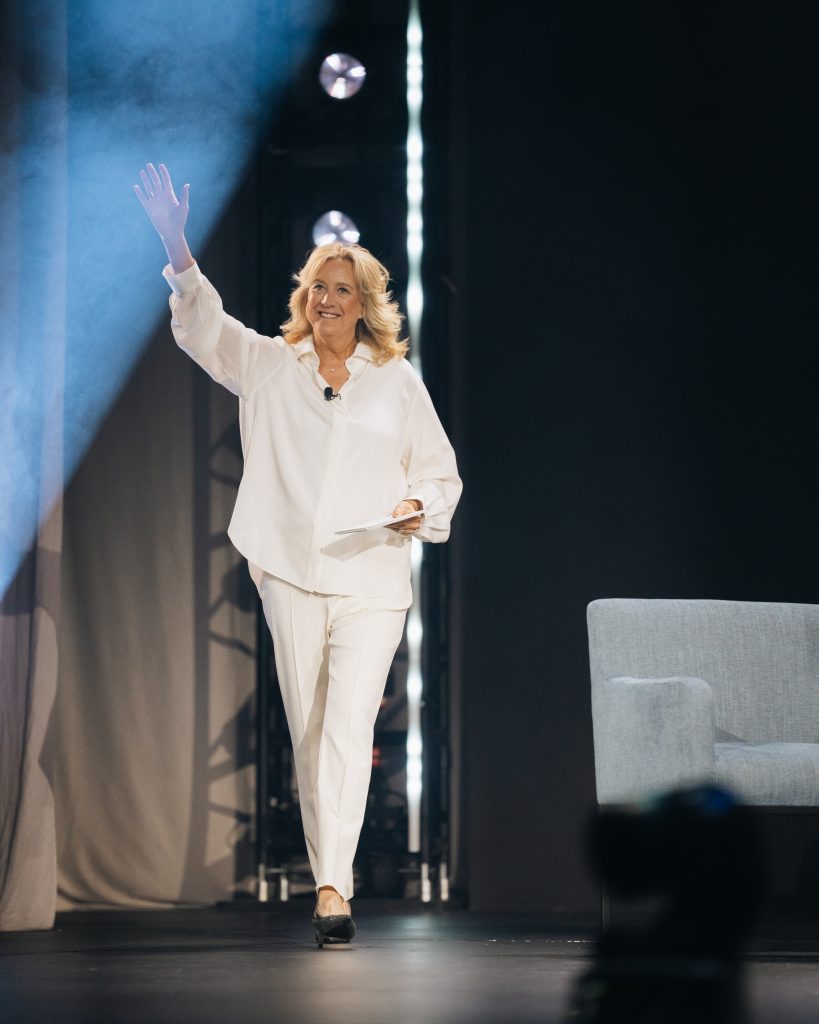
After D’Amaro’s opening, Iwerks came on stage to begin the conversation by first explaining the inspiration for the film. She noted that when she was directing Disneyland Handcrafted, there was one photograph that she saw of Walt Disney riding the mine train through Nature’s Wonderland, and she just couldn’t get it out of her head.
“I wished that I could have gone back in time and asked him, ‘what did it feel like to go through his own lands… and ride it and feel it and experience it with kids and families and leaders around the world,’” she said.
She couldn’t ask Walt, but she could ask today’s worldbuilders.
For Pixar’s Pete Docter, the leap from screen to reality is almost disorienting. “For us at Pixar, it’s all in the computer,” Docter said. “You’ve seen it only two-dimensionally on the screen, so then to walk into that space is just… overwhelming.”
Walt Disney Animation’s Jared Bush, who co-wrote and co-directed Zootopia and Zootopia 2, knows the feeling.
“There’s no set that we go shoot something on,” he said. “This is all first in people’s heads, then it goes to drawings on a piece of paper, and eventually it becomes this real-life place.”
Walking into Zootopia in Shanghai Disney Resort for the first time, he admitted, brought him to tears.
“Not good-looking tears, ugly tears,” Bush laughed.
Bush continued by saying that hundreds of people worked on the first Zootopia to make it feel like a real lived in place.
“So, to step into Zootopia and feel that same love and care, to discover new things as you’re walking through, and then to have the fans that you made the movie for show up and enjoy the same things that you are at the same time… It’s kind of an unbelievable, surreal moment,” he said.
The Past and The Future
What sets Disney apart is that its storytellers and Imagineers work hand in hand, building worlds that reach across generations, cultures, and ages.
Director Jon Favreau spoke of the man who started it all, noting that Walt Disney “always presented the past and the future.”
“Main Street… was inspired by [Walt Disney’s hometown] Marceline, but then also Tomorrowland, which was this utopian future just out of reach. And the audience is the present,” he said. “I think when we preserve the aesthetics that Walt Disney laid out is when it feels consistent, even though we’re evolving into the future.”
That instinct — a respect for the past paired with a push toward the future — is one of the ways Disney delivers its iconic worlds to fans of every generation.
For Lucasfilm’s Dave Filoni, a steward of the Star Wars saga, the challenge isn’t only serving different generations of fans but every kind of fan.
“We have several different generations of Star Wars fans, right? There’s original trilogy fans, prequel fans, sequel trilogy fans, Clone Wars fans, expanded universe fans. They all have different interests,” he said. “And I always look at like how we’re going to serve all these different interests. And most importantly, how do we bring them all together because they have this common love of Star Wars. And I think the park is a great place to do that.”
The Magic of Disney
At Disney, worldbuilding takes many forms, and sometimes it starts with nothing more than a single piece of steel.
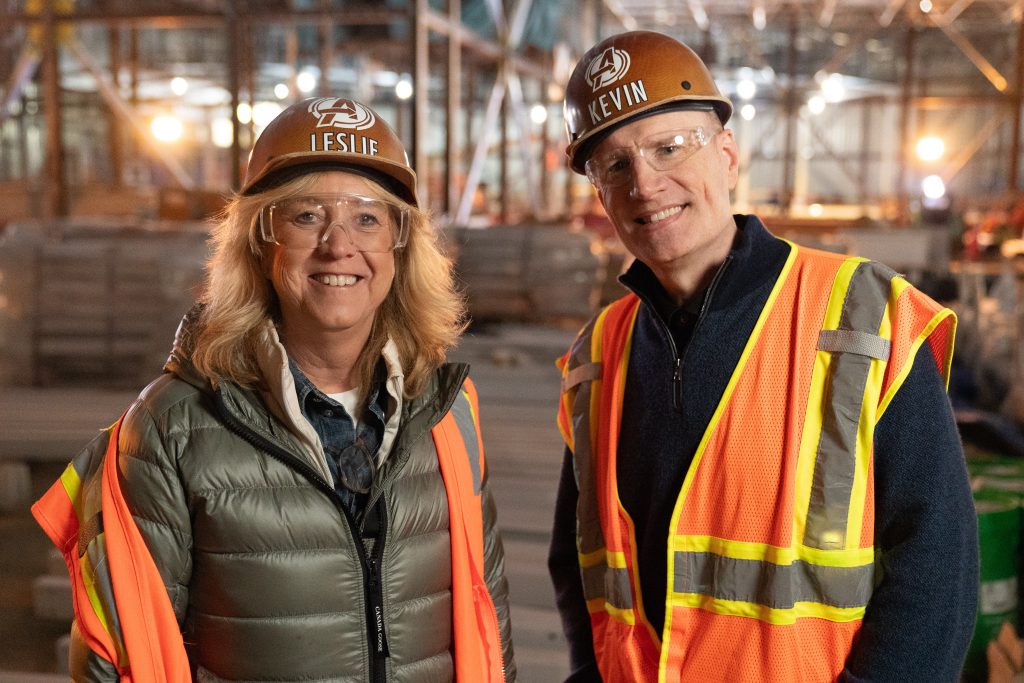
Marvel’s Kevin Feige captured that idea with the story of an early test for what would become a defining feature of Avengers Campus at Disneyland Resort.
“One of the first things they showed us was this piece of steel. It had two other pieces of steel, and they said, ‘Watch this.’ And it went down a rail, flipped, and landed on the table. And I went, ‘Oh, cool,’” he said. “And then the next time I went, it was a little bigger. And the next time I went, it was a little bigger. And now it’s Spider-Man that soars over Avengers Campus.”
Feige continued, “that is so amazing. That I’ve been able to watch that transition and now walk through Avengers Campus and see kids look up at Spider-Man swinging through the sky in real life.
That’s the magic of Disney. It doesn’t just tell unforgettable stories, but it builds worlds where guests can experience those stories in innovative new ways.
At Disney, the story never has to end. Every day, new worlds are being built.