“Curiouser and curiouser.”
The phrase has become synonymous with the adventures of young Alice, whose experiences in Wonderland captivated Walt Disney from the earliest days of his career.
“Alice In Wonderland is a classic Disney Animation film that has withstood the test of time,” Michael Giaimo, Disney Animation Production Designer, said. From the Alice Comedies of the 1920s to Walt Disney Animation Studios’ 1951 feature and later live-action reimaginings, Wonderland has continued to inspire new creative interpretations across generations.
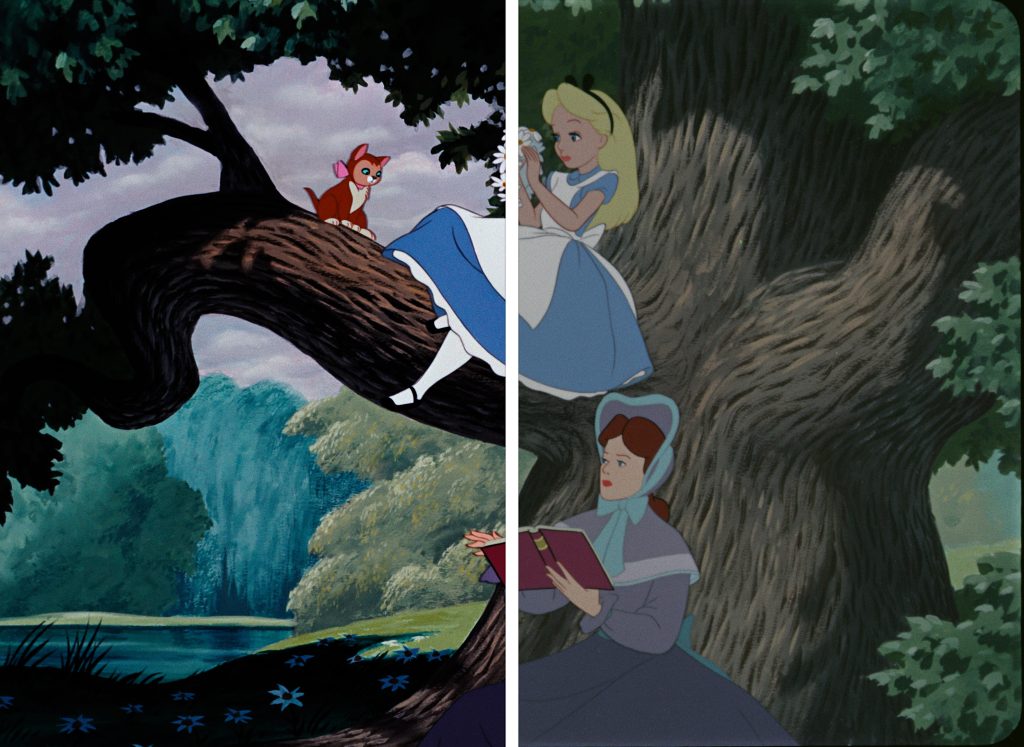
As part of the film’s 75th anniversary, a newly restored version of Walt Disney Animation Studios’ Alice in Wonderland is being celebrated through screenings, educational programming, archival initiatives, and exhibitions exploring the artistry, restoration, and creative techniques behind Disney’s version of Wonderland.
“In its 75th year, [Alice in Wonderland] seems to get better with age as more and more fans are drawn to its boundless energy and visual style,” Giaimo said.
Walt Disney’s Long Fascination with Wonderland
Walt’s connection to Alice began long before the development of the 1951 animated feature.
Early in his career, Walt was inspired by the possibilities of author Lewis Carroll’s world, with its dreamlike logic, eccentric characters, and opportunities for visual invention. Those interests found an outlet in the Alice Comedies, a series of silent shorts that uniquely combined a live actress with animated environments and characters.
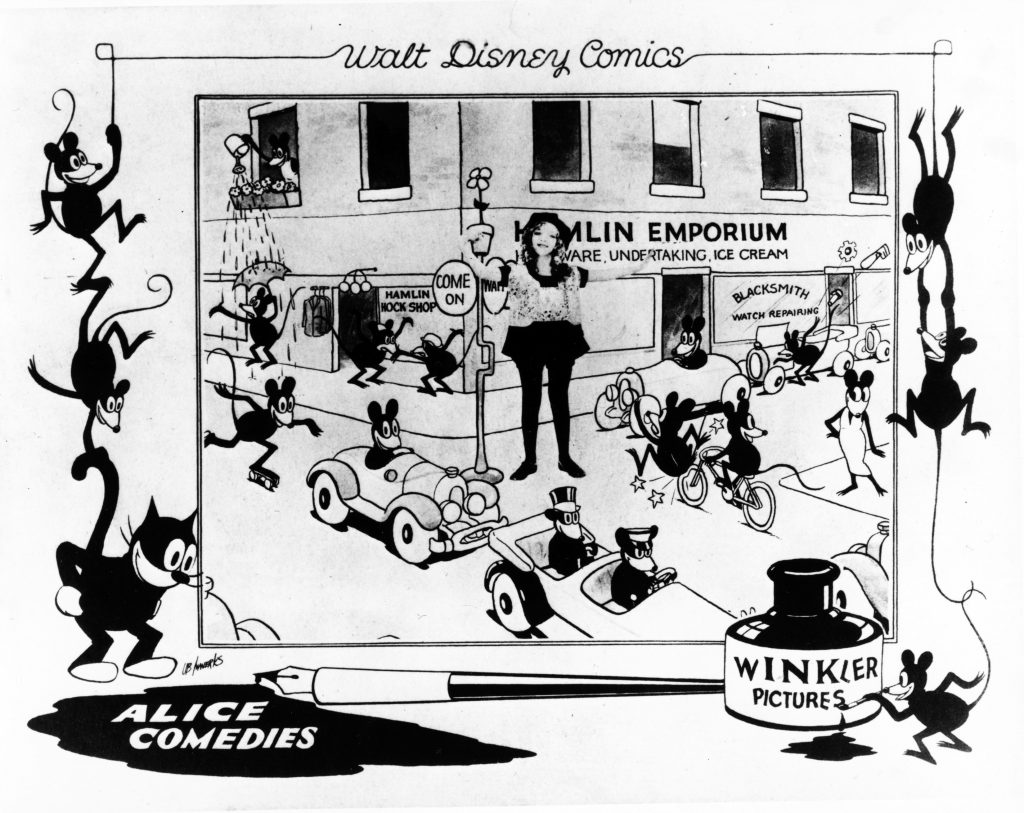
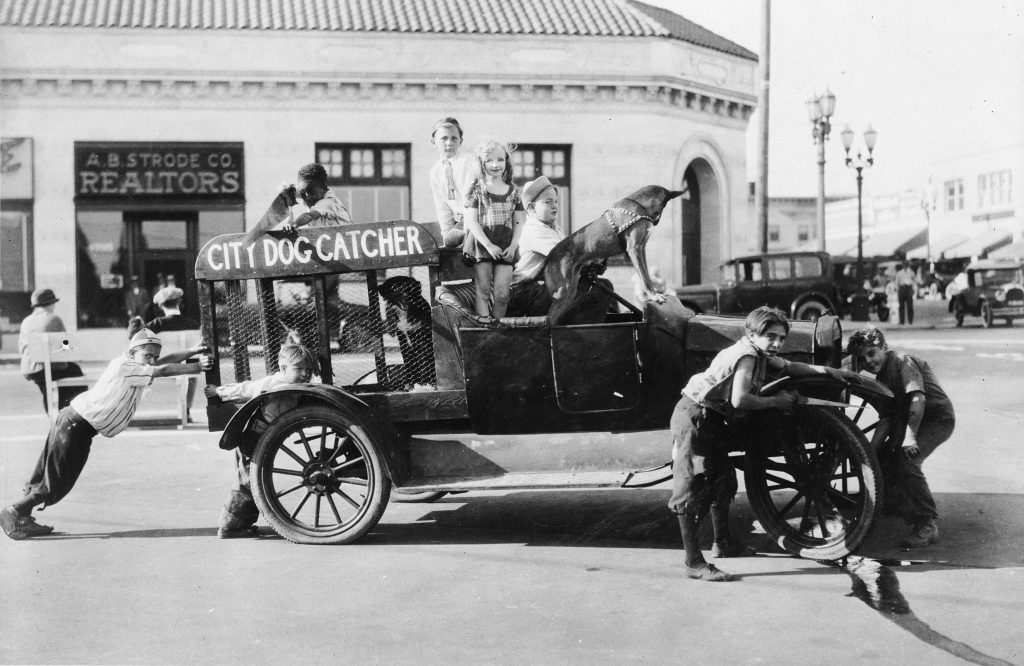
The series became Disney’s first distributed production following Walt’s 1923 agreement with Margaret Winkler, a New York cartoon distributor, which allowed Walt and his brother Roy O. Disney to produce and distribute the Alice Comedies. Between 1924 and 1927, the Disney studio produced 56 Alice Comedies, establishing a creative formula that merged the real and the fantastical in ways audiences had rarely seen before.
From Experiment to Animated Feature
Over the following decades, Walt and his studio artists explored new ways to adapt Carroll’s stories for the screen; various concepts were explored throughout the 1930s and 1940s before the release of Disney Animation’s Alice in Wonderland in 1951.
Premiering in London on July 26, 1951, the animated feature represented years of artistic experimentation and ambition. More than a half million drawings were created to bring Wonderland’s vibrant landscapes and unforgettable characters to life.
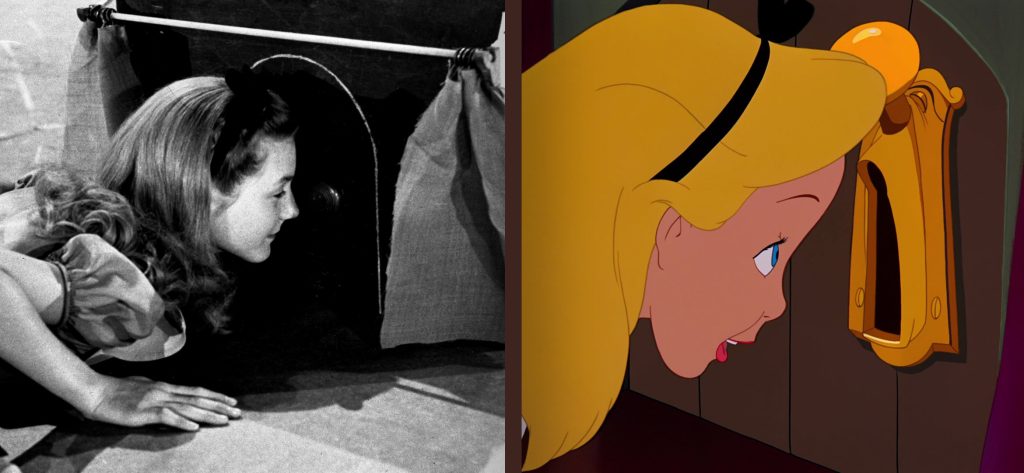
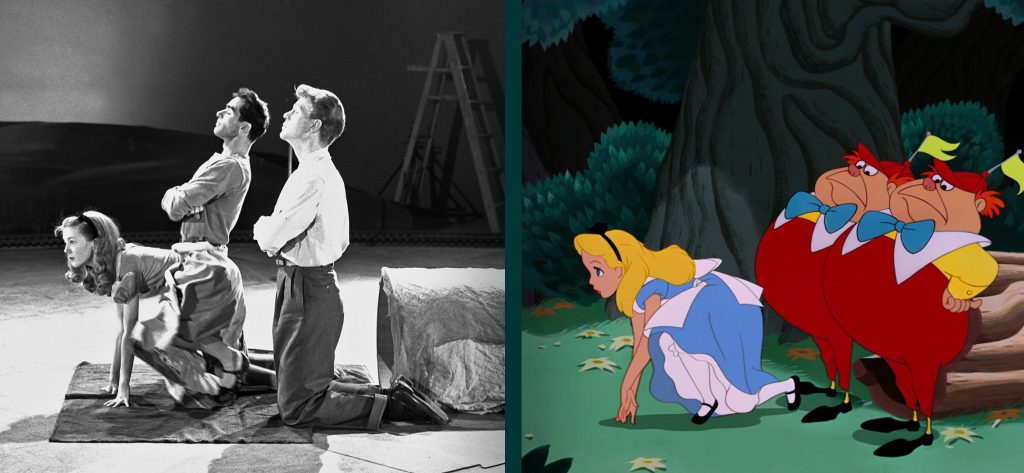
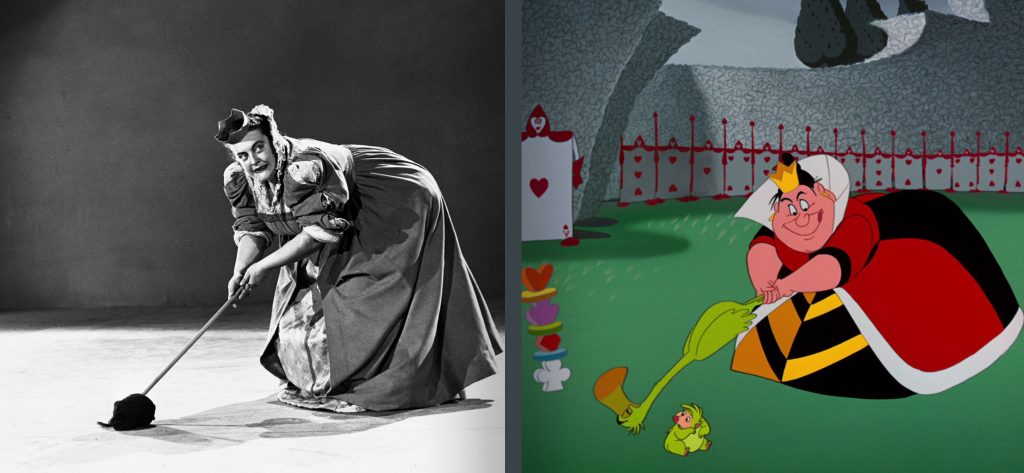
One of the film’s lesser-known creative tools was Disney’s extensive use of live-action reference footage. Actors performed scenes on a studio soundstage using prerecorded dialogue tracks, creating a visual guide for animators studying movement, timing, expression, and physical performance.
The footage itself was not created specifically for release. Instead, it helped animators translate human performances into the animated world of Wonderland.
That process is especially evident in the work of Disney Legend Kathryn Beaumont, the voice of Alice, who also served as a live-action reference model throughout production.
Making the Impossible Feel Real
Part of the enduring appeal of Disney Animation’s Alice in Wonderland lies in how its artists translated creative elements from Carroll’s surreal stories into a fully realized animated world.
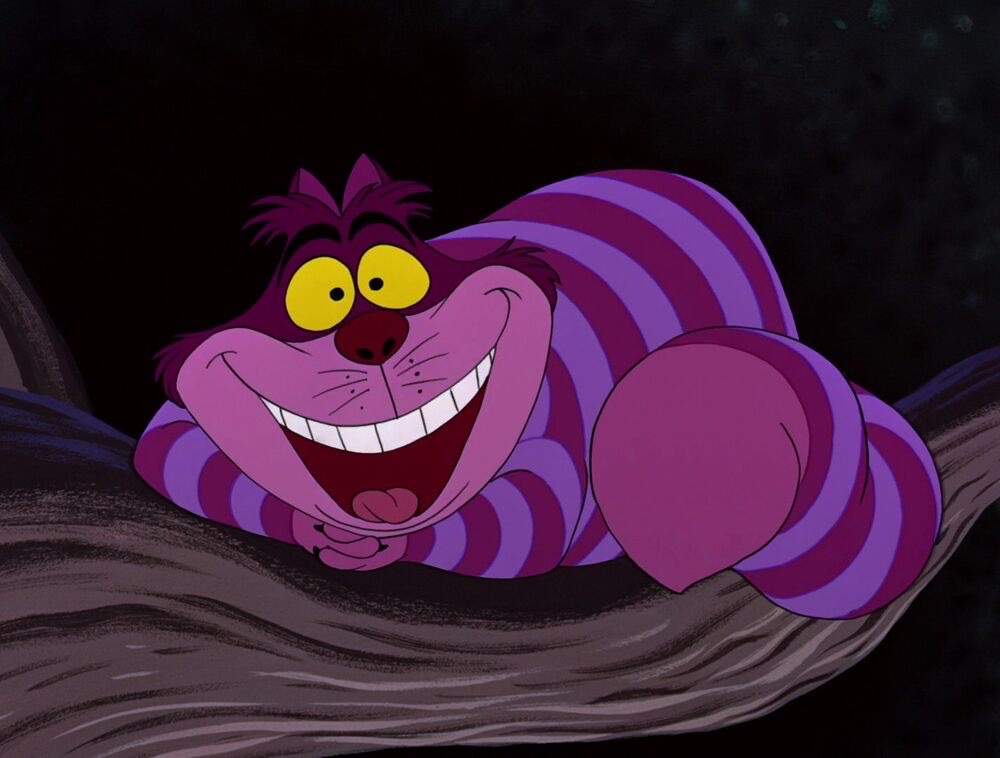
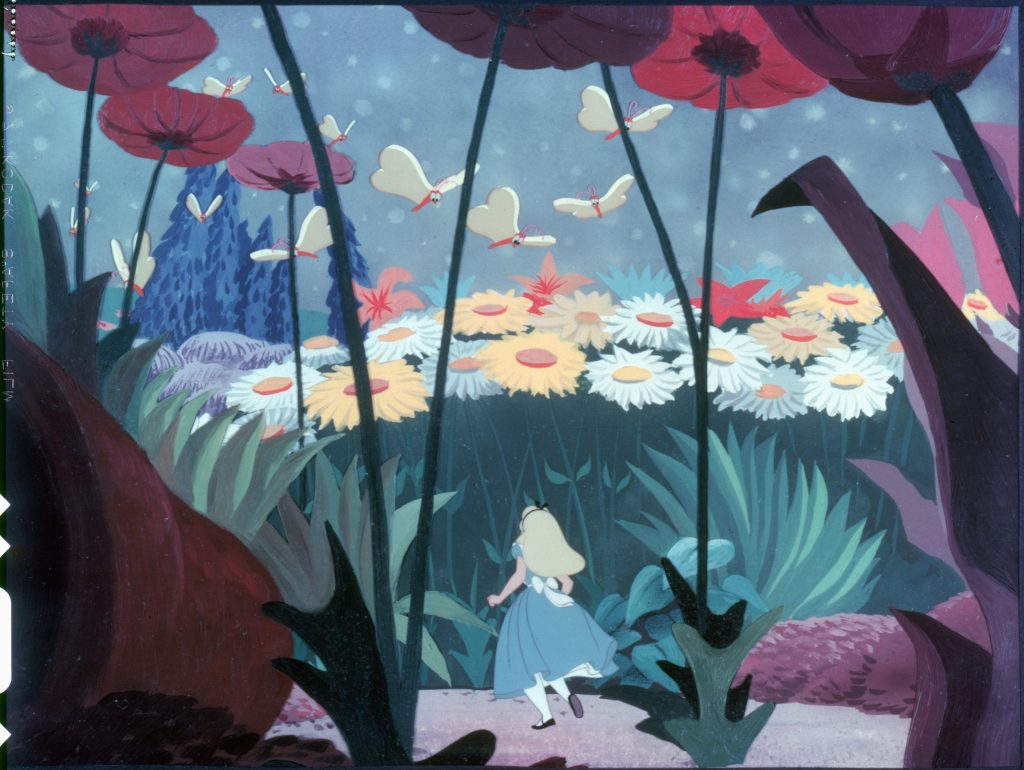
“On film, through the efforts of Disney animators, artists, and filmmakers, the characters and stories by Lewis Carroll really come alive in such a memorable and appealing way,” Fox Carney, Manager, Research, Disney Animation Research Library, said. “Animation makes the flowers sing. Animation can make a striped cat slowly vanish in mid-air. A birthday doesn’t need to be a birthday. It can be an ‘unbirthday!’”
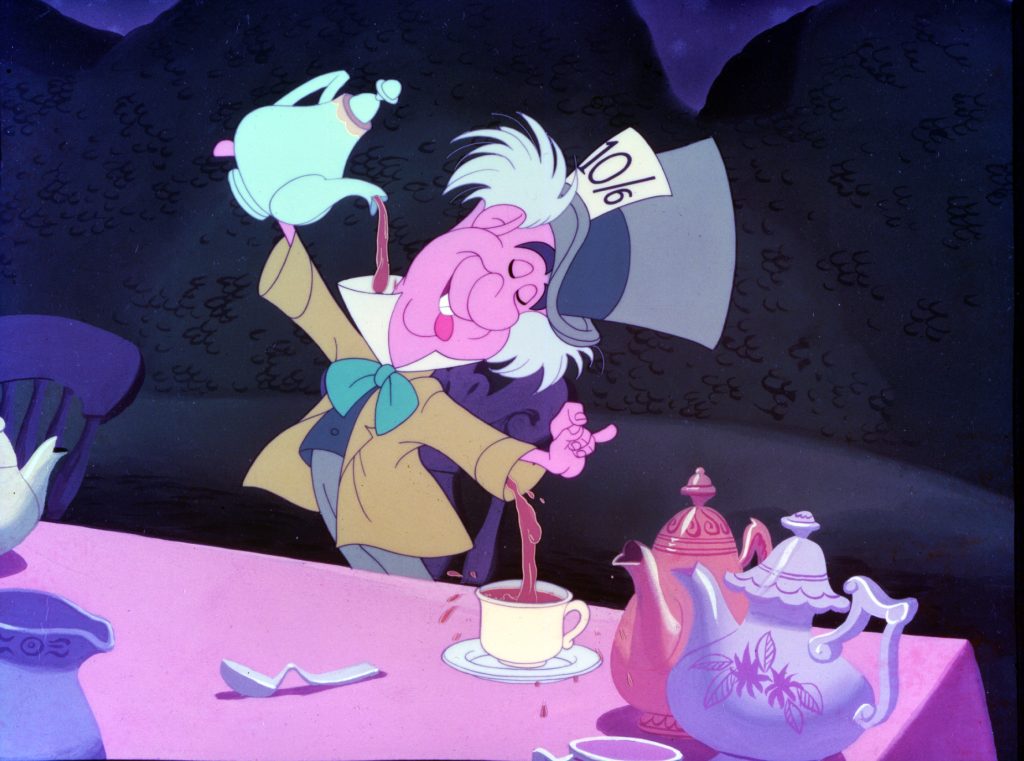
Music also played a key role in the creation of a believable and engaging world, and Alice in Wonderland had a “song virtually for every sequence,” according to Tori Cranner, Manager, Art Collections, Disney Animation Research Library. Combined with memorable voice performances from Disney Legend Ed Wynn as the Mad Hatter and Jerry Colonna as the March Hare, the result was a distinctive interpretation of Carroll’s work.
Carney also pointed to the creative choices behind the film, including the casting, character animation, and Beaumont’s work as both Alice’s voice and live-action model.
“Rather than facing the daunting challenge trying to adapt to the letter of the books, the filmmakers chose to embrace the absurdity of their episodes and push them to their limits. The animated film they created is a fantastical journey through a very bizarre world… One doesn’t merely watch Alice in Wonderland, one experiences it,” Cranner said.
Decades later, Alice’s adventures found new audiences through live-action adaptations, including Alice in Wonderland, the 2010 film directed by Tim Burton that made more than $1 billion at the global box office, and its 2016 sequel, Alice Through the Looking Glass.
Return to Wonderland
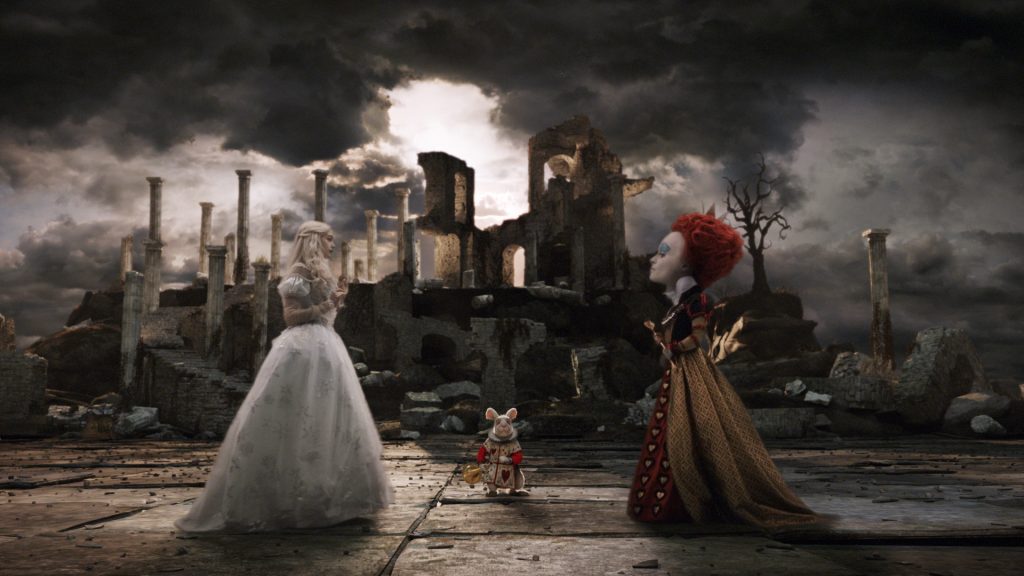
Streaming Now
19-year-old Alice returns to the whimsical world of her youth.
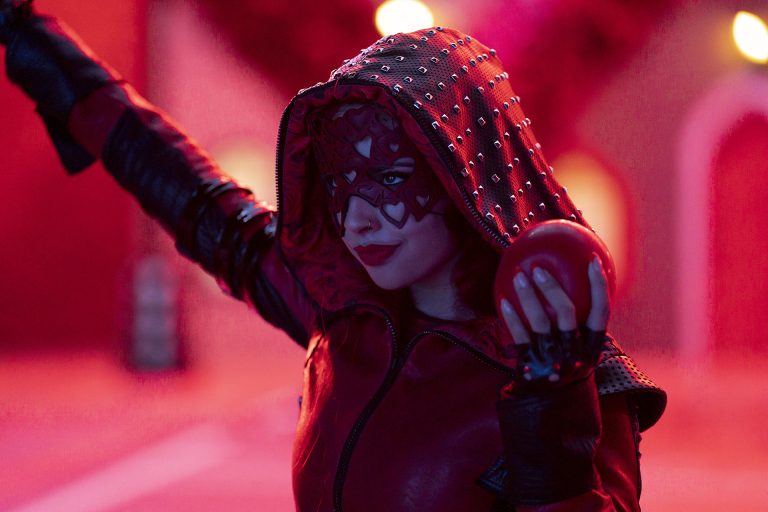
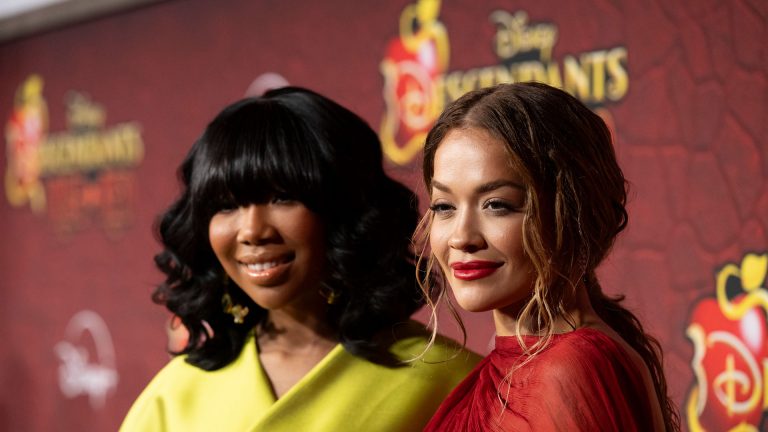
The films brought Carroll’s characters and settings to life with contemporary filmmaking tools, while the later Disney’s Descendants franchise has continued to expand the world of Wonderland with Descendants: Rise of Red (2024) and Descendants: Wicked Wonderland (2026).
A 75-Year Celebration
Today, Disney is once again returning to the 1951 film through an extensive restoration effort.
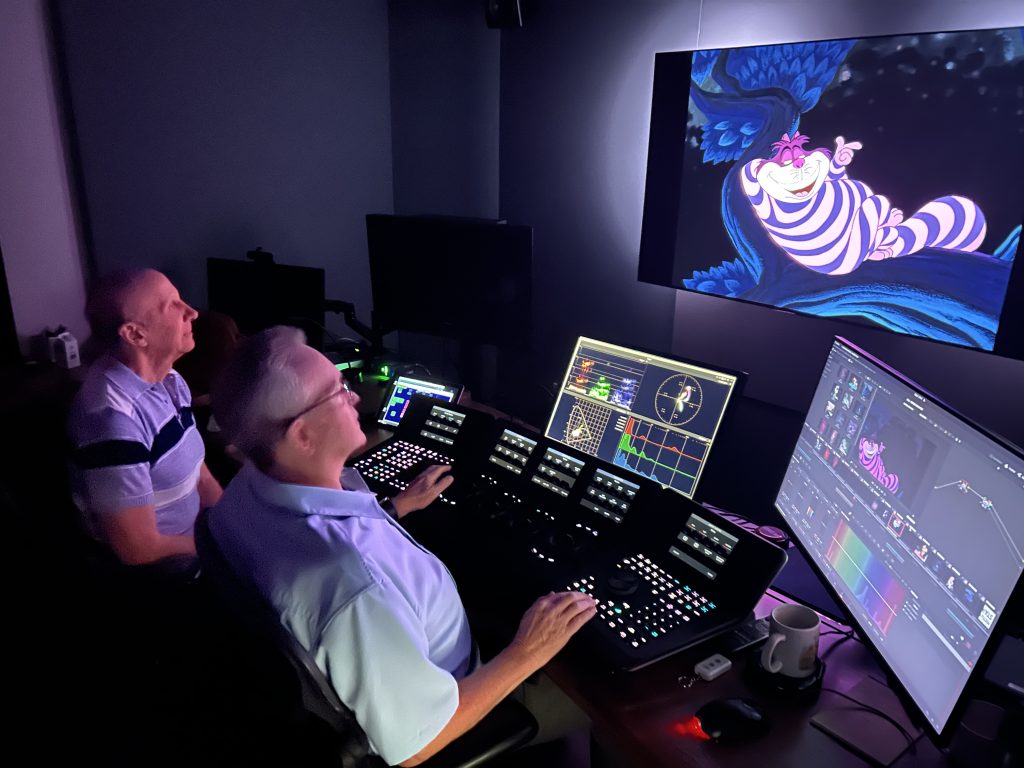
“The restoration process for Disney Animation’s Alice in Wonderland was quite arduous. We don’t impose our taste when restoring a film but rather try to channel the original artistic intent,” Giaimo said. “Another aspect in the restoration process is understanding commercial art styles and color trends of the time that may have influenced the art style. This way you get a wider view of the filmmakers’ process. It’s like traveling back in time to the period in which the film was in production — as art is not created in a vacuum but is a combination of all influences in the zeitgeist of any given time period.”
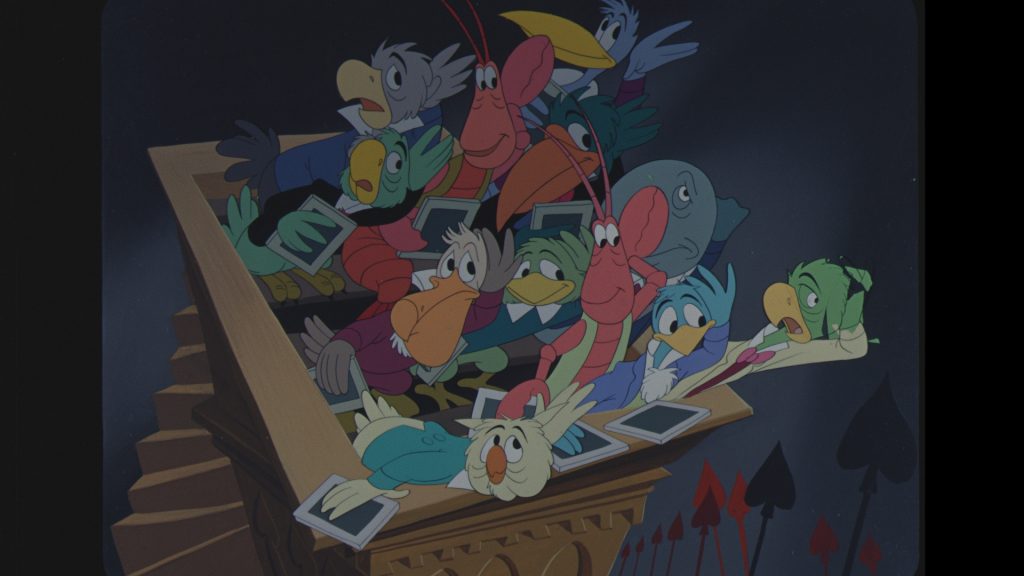
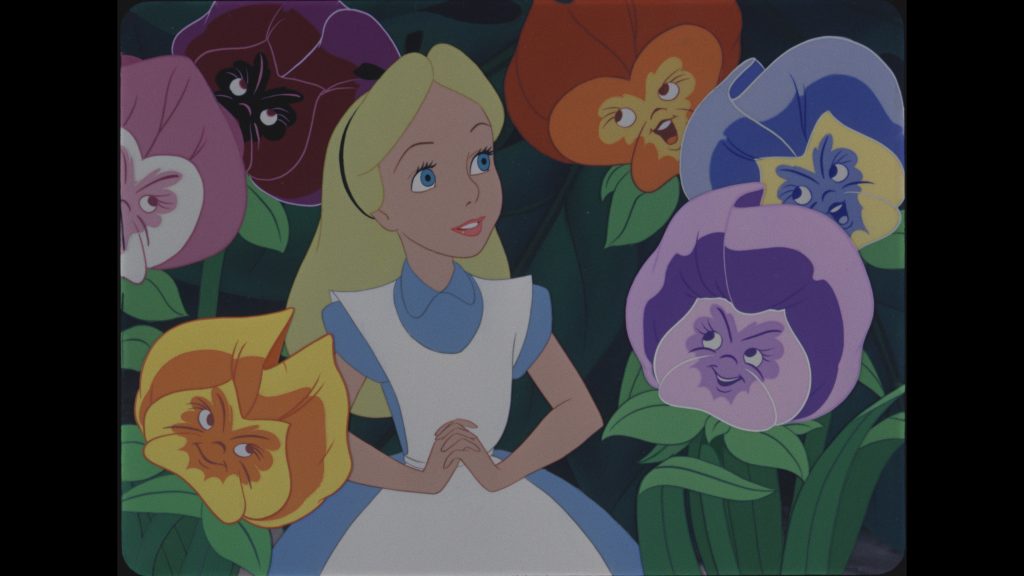
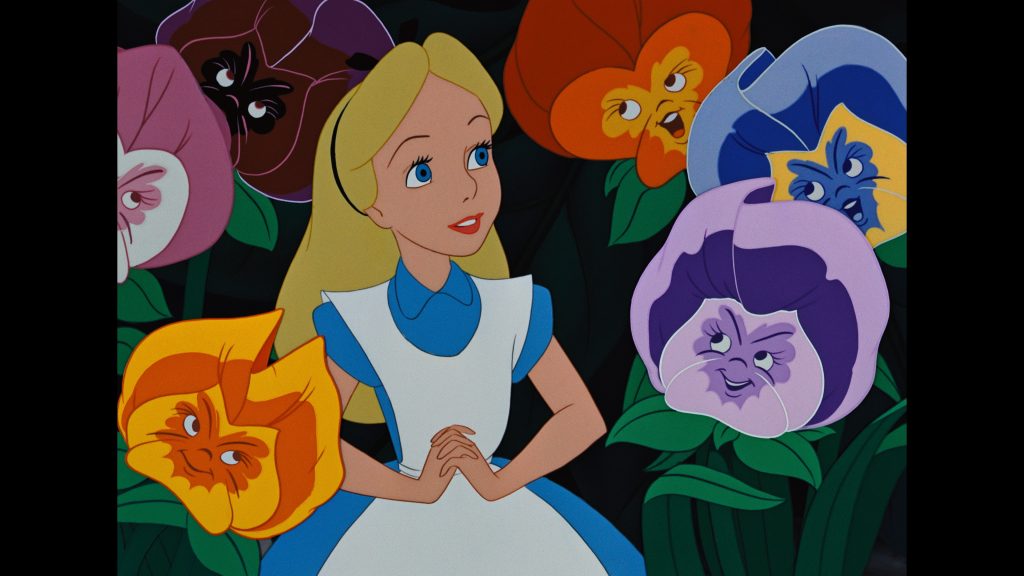
The restoration relied on the original 1951 nitrate Technicolor Successive Exposure negative and included scanning 324,000 frames. A crew of 100 artists spent six months completing roughly 10,000 hours of dirt cleaning and damage repair as part of the nine-month project.
“The restoration process on a feature like Alice in Wonderland is extensive, with numerous people working meticulously to bring the film back to its original beauty. At Disney, when we restore a film, we use the original negative whenever possible to ensure that we are starting with the highest quality image,” Karen Weissman, Senior Manager, Restoration & Preservation, said.
Looking at Alice Through a New Lens
The anniversary celebration extends beyond the restored film itself.
The Walt Disney Archives’ upcoming Capturing Life, Creating Character: The Art of Live-Action Reference exhibit, debuting August 8 at the Muzeo Museum and Cultural Center in Anaheim, Calif., explores the animation technique that helped shape Walt Disney’s Alice in Wonderland – along with additional Disney productions – drawing a direct connection between the live-action performances filmed at the studio and the animated characters they helped inspire.
At the same time, this year’s D23: The Ultimate Disney Fan Event will feature 75 Years of Nonsense: Alice in Wonderland, a program on the Walt Disney Archives Stage that will revisit the film’s creation, legacy, and enduring cultural presence.
Together, these efforts offer new ways to explore the artwork, research, restoration, and creative techniques that helped bring Disney’s version of Wonderland to life.