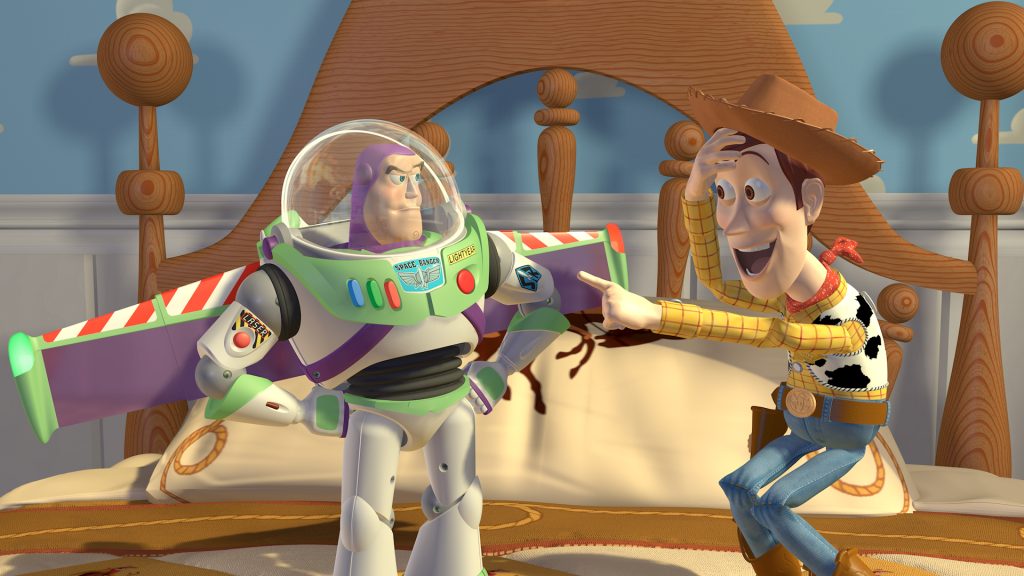
When Toy Story opened in theaters on Nov. 22, 1995, it not only introduced audiences to iconic characters Woody and Buzz Lightyear, it also reshaped the future of animation.
As the first fully computer-animated feature film, Toy Story marked a turning point in moviemaking –pairing emerging technologies with character-driven storytelling to push creative boundaries to infinity and beyond.
That breakthrough did not happen overnight.
Toy Story was the culmination of years of experimentation and creative trust between Pixar Animation Studios and Disney
Pixar’s Origins in Technology — and an Early Disney Connection
Pixar’s story begins in 1979, when Ed Catmull was recruited to lead Lucasfilm’s Computer Division — a group tasked with imagining a digital future for filmmaking. The group focused on tools that did not yet exist, including digital sound and computer graphics.
By the mid-1980s, the group’s animation team had begun producing original short films that showed how computer graphics could support character, humor, and emotion.
In 1984, animator John Lasseter is hired full-time and a partially completed version of The Adventures of André & Wally B. premieres at SIGGRAPH, an annual conference focused on computer graphics and interactive techniques that brings together researchers, artists, and technologists from around the world. The film featured flexible characters, hand-painted textures, and motion blur — early signals of a storytelling approach that placed character at the center of technical innovation.
A Collaboration Takes Root
In 1986, Apple co-founder and Disney Legend Steve Jobs purchased Lucasfilm’s Computer Division from Disney Legend George Lucas, establishing Pixar. That same year, Pixar and Disney began working together on CAPS — the Computer Animation Production System that would go on to transform traditional hand-drawn animation.
That year also marked the debut of Luxo Jr., a short film and Lasseter’s official directorial debut, that became a defining statement of Pixar’s creative philosophy (not to mention their lamp logo). With simple forms and expressive movement, the film showed that computer animation could convey personality and emotion — qualities that had long defined Disney animation — and signaled where Pixar was headed next.
Throughout the late 1980s and early 1990s, Pixar continued refining both its technology and its storytelling approach. Shorts like Red’s Dream, Tin Toy, which became the first computer‑animated short to win an Academy Award®, and Knick Knack reinforced the idea that innovation and emotion could evolve together.
During this period, Pixar hired animators, Andrew Stanton and Pete Docter, who honed skills that would soon be applied on a much larger scale.
In 1991, Disney and Pixar announced an agreement to make and distribute a computer‑generated animated movie. Pixar soon began work on the project that would become Toy Story.
A Breakthrough That Changed Animation
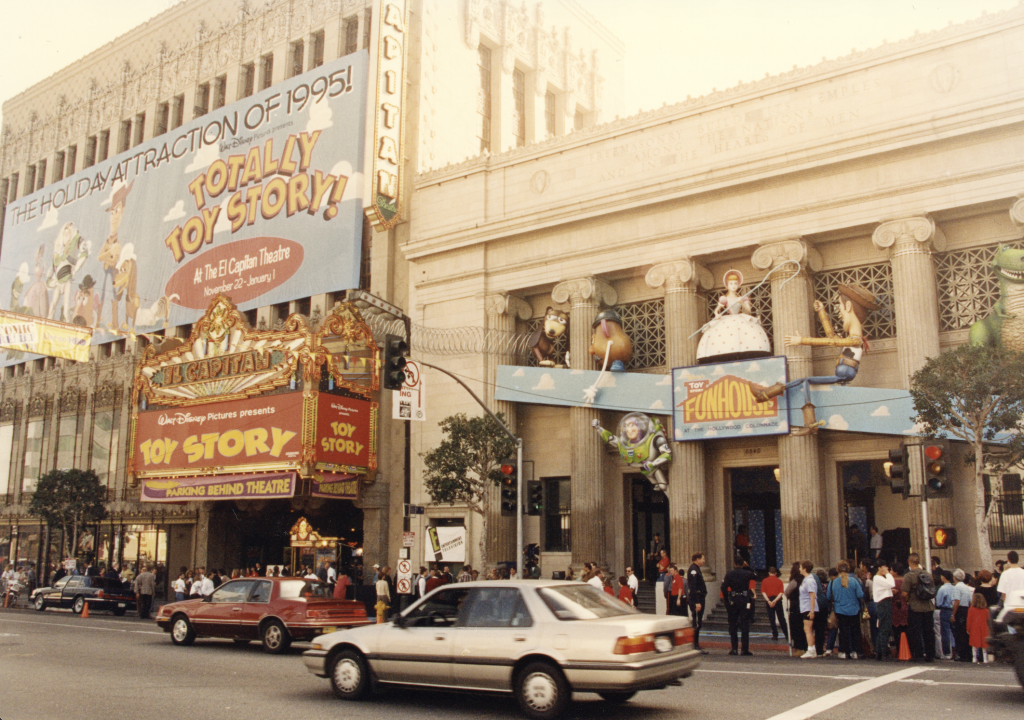
By the time Toy Story reached the finish line, its creators understood they were attempting something unprecedented – but only later did they fully grasp how unlikely its success had been.
Toy Story opened on November 22, 1995, at No. 1. The film generated more than $500 million at the global box office, establishing Pixar as a major new force in animation — an impact later recognized with a Special Achievement Academy Award® honoring its groundbreaking technical and creative innovation.
“What we did understand early on was that the film’s success would depend on the strength of its story and characters,” Docter, now Pixar’s Chief Creative Officer, said. “Without that, even the world’s first fully computer-animated feature would just be a gimmick.”
Watch on Disney+
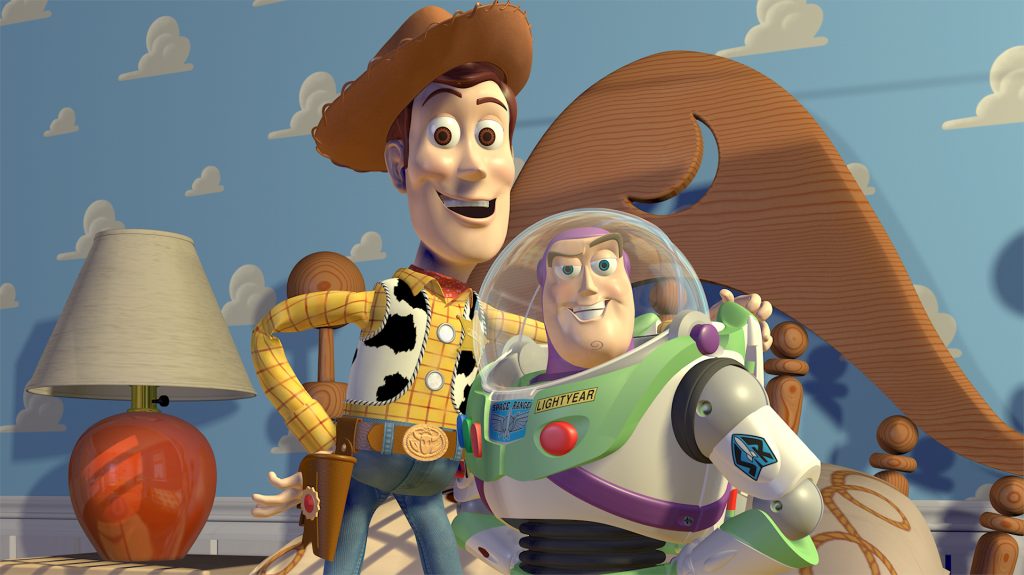
You've Got a Friend in Toy Story
Enjoy the entire Toy Story collection on Disney+.
A Longstanding Partnership Becomes Official
In the years that followed, Pixar and Disney continued to build on the foundation established well before Toy Story, collaborating on films including Finding Nemo (2003) and The Incredibles (2004), both of which won the Academy Award® for Best Animated Feature.
In 2006, Disney announced it would acquire Pixar Animation Studios, formalizing a creative partnership that had already been in place for more than a decade.
A Franchise That Grows with Its Audience
As Stanton has noted, toys are “kind of perennial,” making the franchise something audiences can grow alongside — from childhood to parenthood and beyond.
That journey continues this summer.
Toy Story 5 opens in theaters on June 19, bringing Woody, Buzz, Jessie, and the rest of the characters back to the big screen for a new adventure that finds the gang challenged by an all-new threat to playtime: a smart tablet named Lilypad.
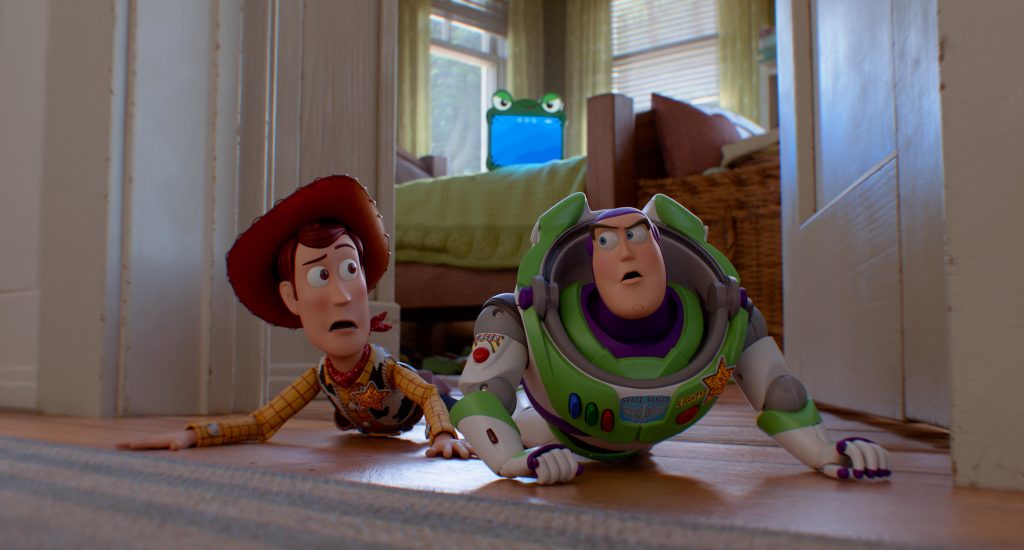
A [Toy] Story Still Being Written
In 2025, Pixar celebrated Toy Story’s 30th anniversary by rereleasing the original film in theaters and holding other special events across The Walt Disney Company and Pixar — a reminder of how one story helped shape an entire studio.
Looking back, Toy Story is more than Pixar’s first feature, it’s a thread that runs through the animation studio’s history — connecting early experiments in computer animation, a years‑long creative partnership with Disney, and a belief that powerful storytelling and creative excellence can evolve alongside technological innovation.