As The Walt Disney Company marks the 250th anniversary of the United States, the Walt Disney Archives is opening its doors to examine a few special artifacts preserved safely in its collection that illustrate how Disney has been woven into the American story.
“Disney has long celebrated the American experience through storytelling — offering something alive, something shared, and something each generation is invited to engage with in its own ways,” according to Rebecca Cline, Director of the Walt Disney Archives.
This story explores three artifacts from Disney’s past — an early Disneyland concept art pitch book, the 1971 American flag from the dedication ceremony of Magic Kingdom at Walt Disney World, and one of the Declaration of Independence props from Disney’s National Treasure (2004) — that reveal how the company continues to explore America’s past, present, and future.
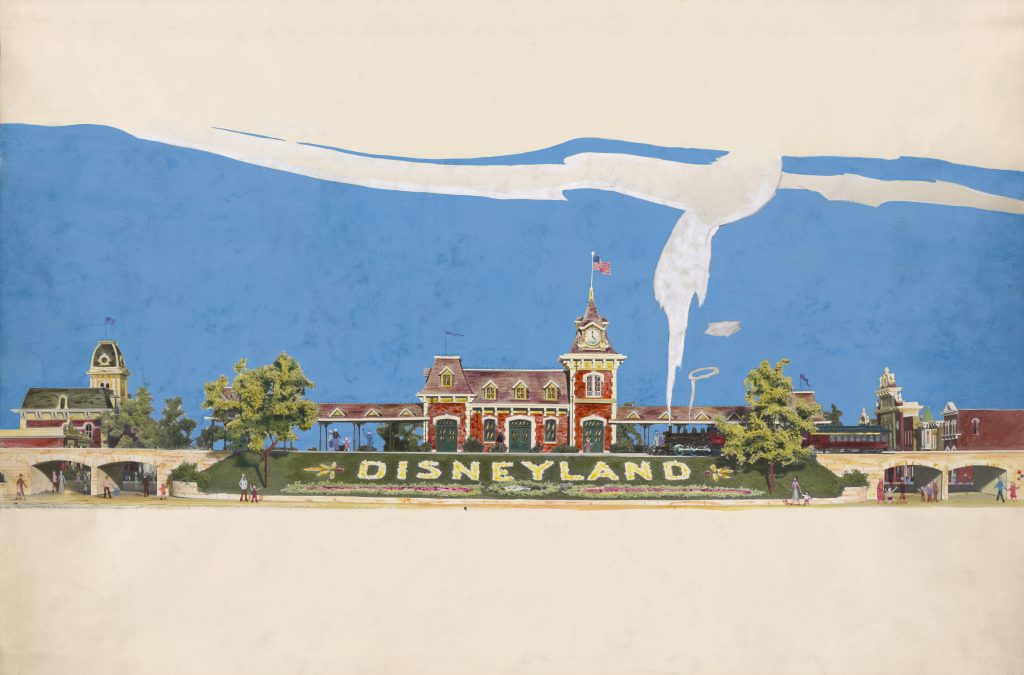
Disneyland Pitch Book
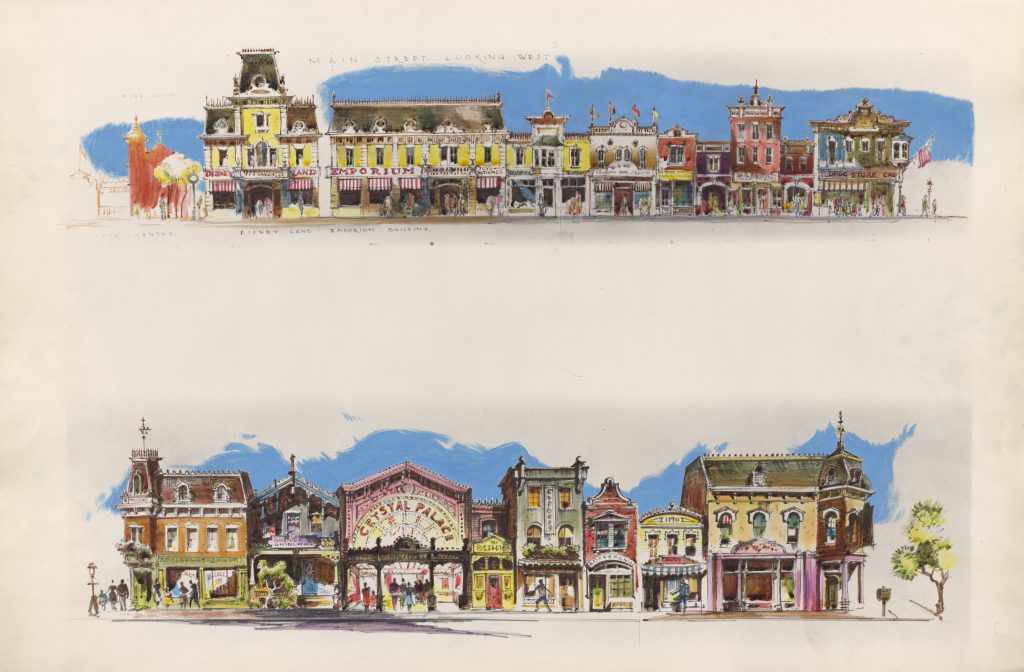
In the early 1950s, as Walt and Roy O. Disney were feverishly gathering resources to turn Walt’s dream of the first themed family entertainment park into a reality, Walt worked with some of his legendary studio artists to create a portfolio of images that, “articulated his own dreams and point of view for what he wanted to create,” Cline said.
Core to that vision are the images of Main Street, U.S.A., which appear remarkably close to what is standing in Anaheim, California, today. They recall Walt’s early days in the Midwest, capturing a moment of transition at the dawn of a new era, “where horse-drawn vehicles share the street with motorized automobiles and where both gas lamps and electric lightbulbs illuminate the night,” Cline remarked.
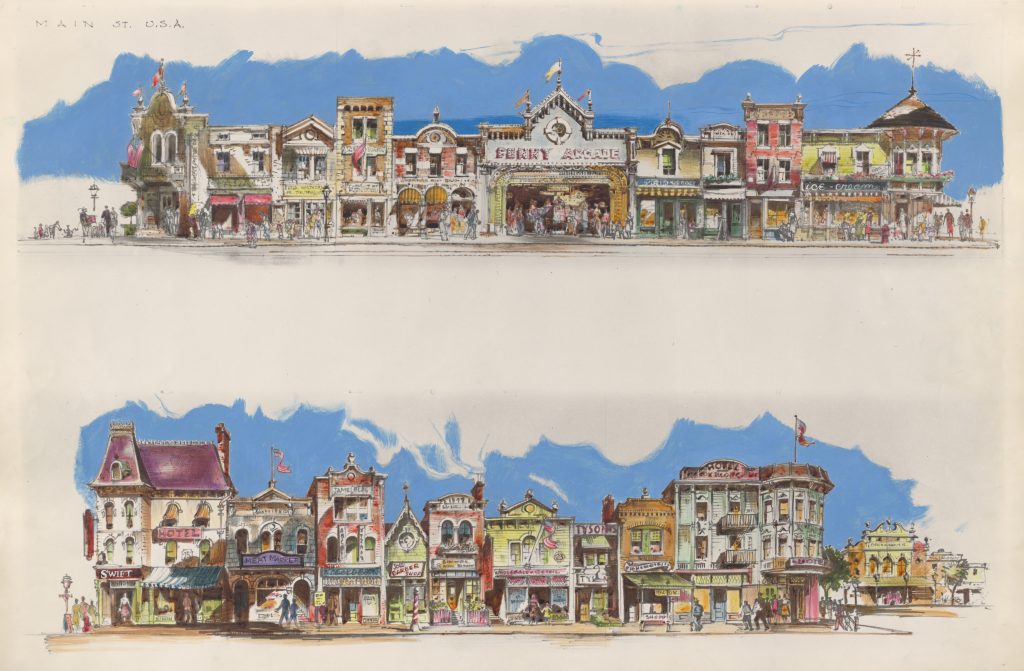
Through Main Street, U.S.A. — the very intentional entryway into the park for both its physical and emotional qualities — a unique theme emerges, one that highlights Walt’s view of America.
That fond recollection is balanced by the entrance to Tomorrowland, located right around the corner from Main Street, U.S.A., which as Cline noted, “reflects a profound faith in innovation and in the idea that American ingenuity can shape a better, more hopeful future.”
The juxtaposition of those two areas suggests that, as Cline explained, “progress and optimism were not at odds with tradition but rather grew out of it.”
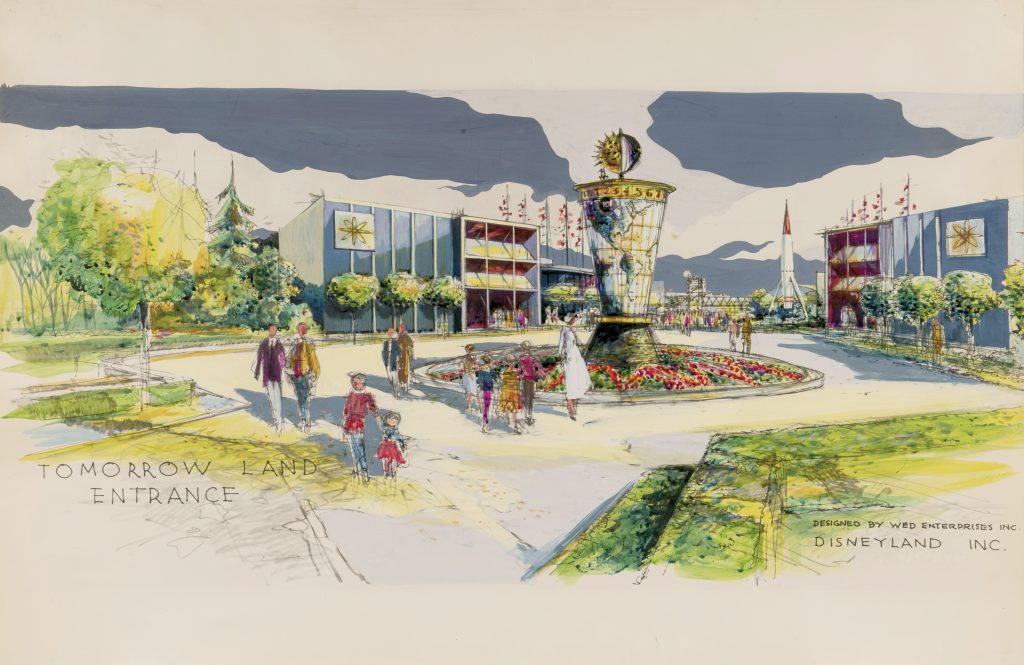
“What is so powerful about the original Disneyland pitch books — and the artwork within them — is that they allow us to see, almost unfiltered, how Walt Disney chose to frame his own idealized vision of America — not as a static reality, but as an impressionist, emotional story still being written,” Cline said.
As Disney parks have opened around the world, they’re designed to reflect the unique local cultures in which they’re situated, while still carrying forward Walt’s values.
As Cline noted, “Disneyland has become a kind of cultural ambassador, introducing global audiences to ‘the ideals, the dreams, and the hard facts’ that Walt believed were at the heart of the American experience.”
Magic Kingdom Grand Dedication Ceremony American Flag
By the time Walt Disney World opened in 1971, many of the American ideals built into Disneyland were already deeply associated with the Disney company’s identity. One of those is represented by the daily Flag Retreat ceremony, a cherished tradition honoring military veterans and their families, which has roots dating back to the Opening Day of Disneyland on July 17, 1955, and continues today.
With Disneyland, “Walt and Roy were building more than an entertainment destination; they were creating an environment that reflected a set of values they believed were central to the American experience,” Cline said. “By incorporating a formal moment of recognition into the daily life of the park, they ensured that those values were not abstract, but visible and shared.”
As a company founded by strong supporters of the U.S. military, Disney has long had an affinity for those who have served in uniform. Years before they started the company, Walt and Roy O. Disney both served their country during the First World War era. Roy served in the U.S. Navy while Walt later served as a chauffeur for the Red Cross Ambulance Corps spending months working in France shortly after the armistice was signed.
So, when it came to opening Walt Disney World Resort, daily flag ceremonies naturally became a part of The Most Magical Place on Earth.
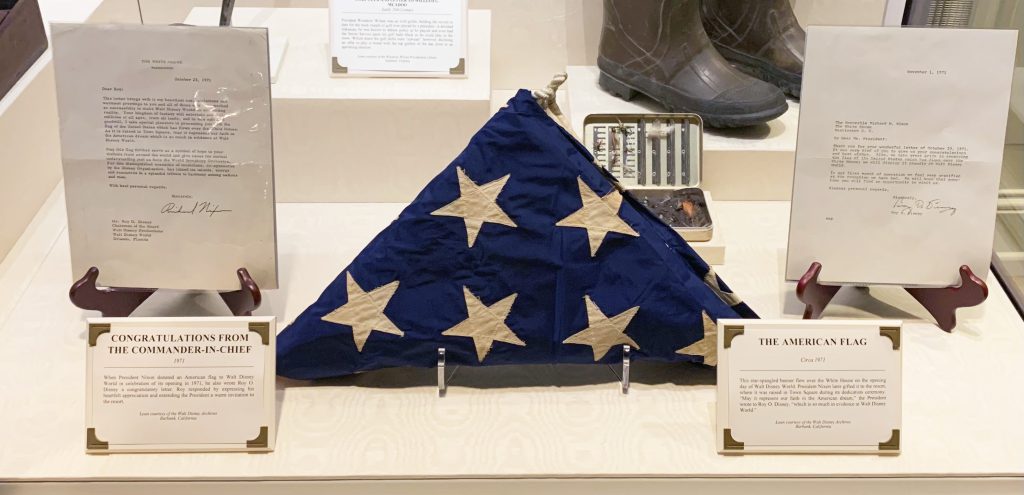
In the Walt Disney Archives’ collection is the 9-by-5-foot American flag that was raised over Magic Kingdom Park on October 25, 1971, during the park’s grand dedication ceremony led by Roy O. Disney. The flag carries additional significance, as it had previously flown over the White House in Washington, D.C., on October 1, 1971 — the same day that Walt Disney World officially opened to the public.
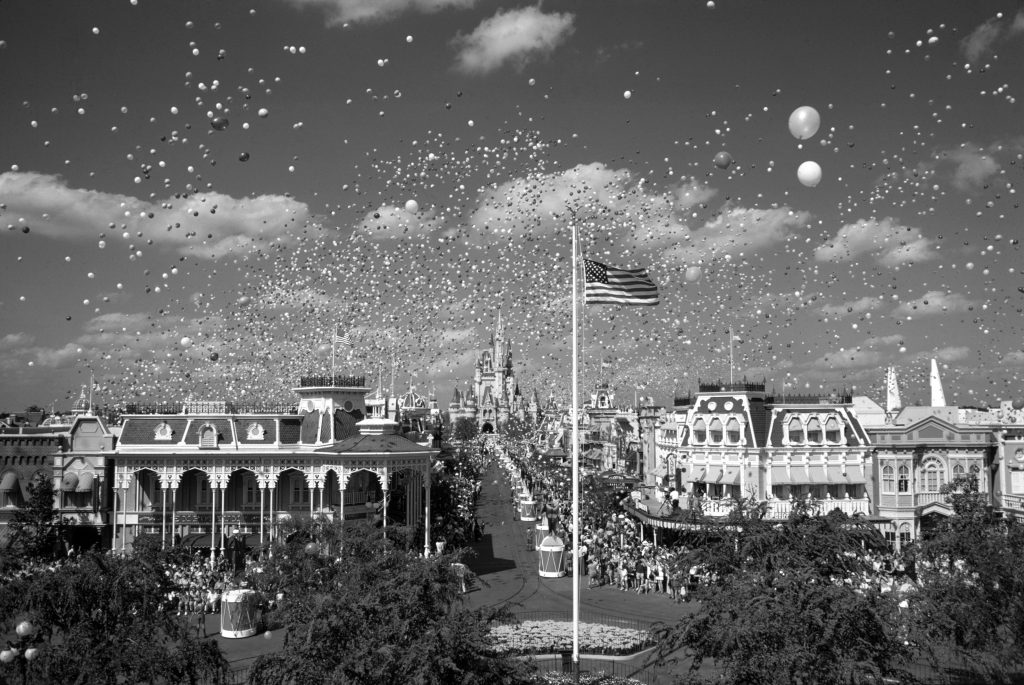
After flying over Town Square on Main Street, U.S.A. for the 1971 festivities, the flag was placed in the care of the Walt Disney Archives on behalf of Roy O. himself. 50 years later, for the golden anniversary of Walt Disney World, the artifact was carried back from company headquarters in Burbank, California, by Cline to be publicly displayed in the rotunda gallery at The Hall of Presidents in Liberty Square — a fitting “full circle” moment for a truly unique public emblem.
Declaration of Independence from Disney’s National Treasure
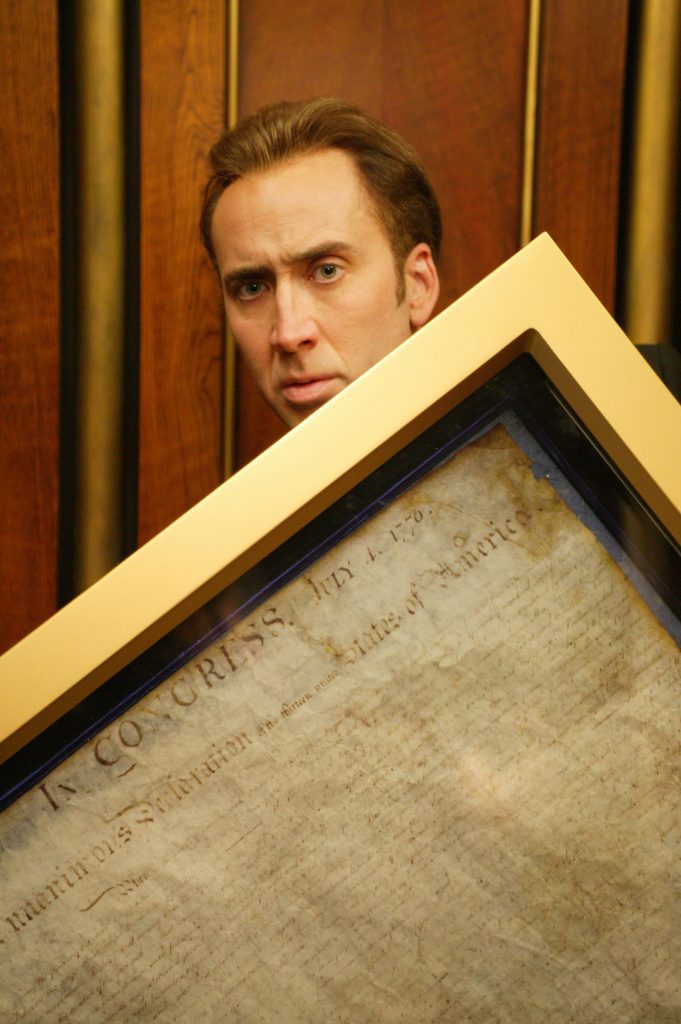
When it came to the Declaration of Independence prop from the 2004 film National Treasure, the Walt Disney Archives didn’t have to steal it like the film’s protagonist, Ben Gates (played by Nicolas Cage).
For the Walt Disney Archives, this prop represents more than a memorable movie artifact. In the 2004 film, the Declaration becomes the centerpiece of a modern adventure, transformed into a symbolic gateway to the nation’s past. By building a treasure hunt around one of America’s most recognizable documents, the film reframes history as something charged with mystery, meaning, and active relevance in the present.
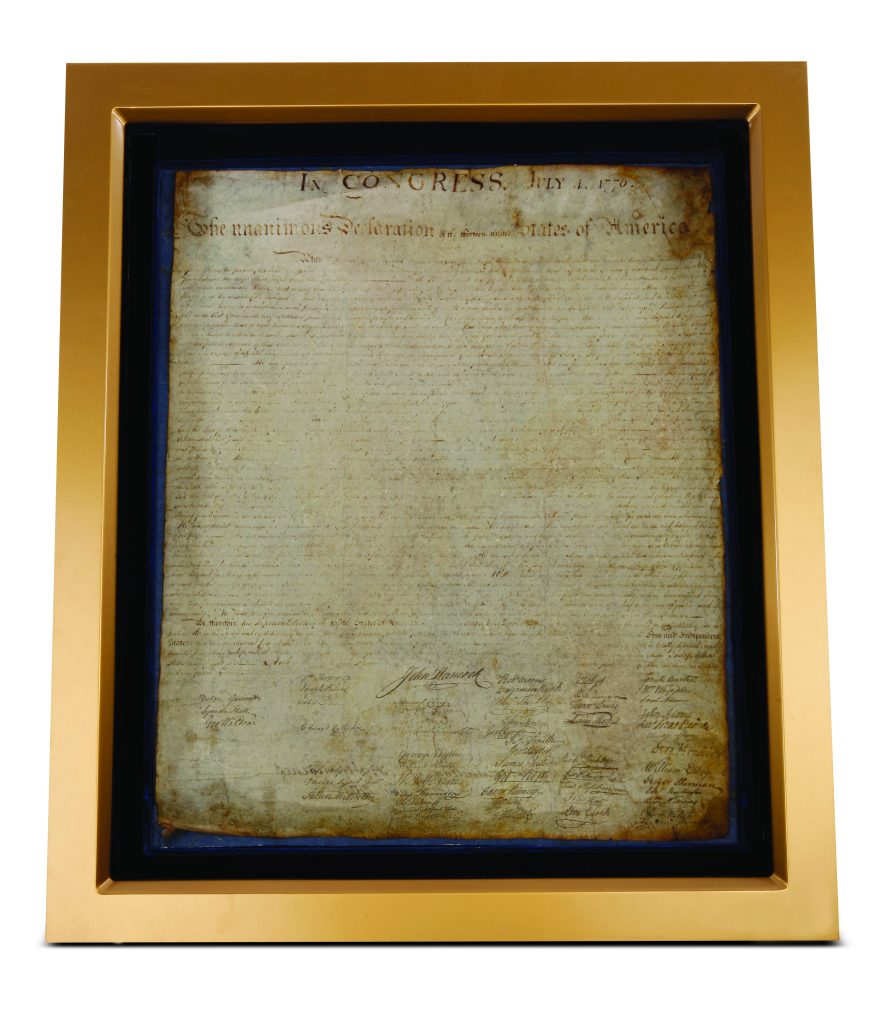
That approach is central to why the prop matters. Rather than treating the Declaration as an object of passive reverence, National Treasure places it inside a high-stakes dilemma.
As Cline explained, the story encourages viewers to see history, “not as something completed, but as something that we remain connected to, and responsible for, in the present.”
The movie — captured through filming of iconic sites in Washington, D.C., Philadelphia, New York, California, and Utah — treated the Declaration with respect even as it reimagined it through suspense, intrigue, and adventurous storytelling.
“The goal has been to invite audiences in — to move from observation to participation,” Cline said. “In doing so, the story of America becomes not something distant or abstract, but something immediate, explored, and, in many ways, shared.”
Watch on Disney+
'National Treasure'
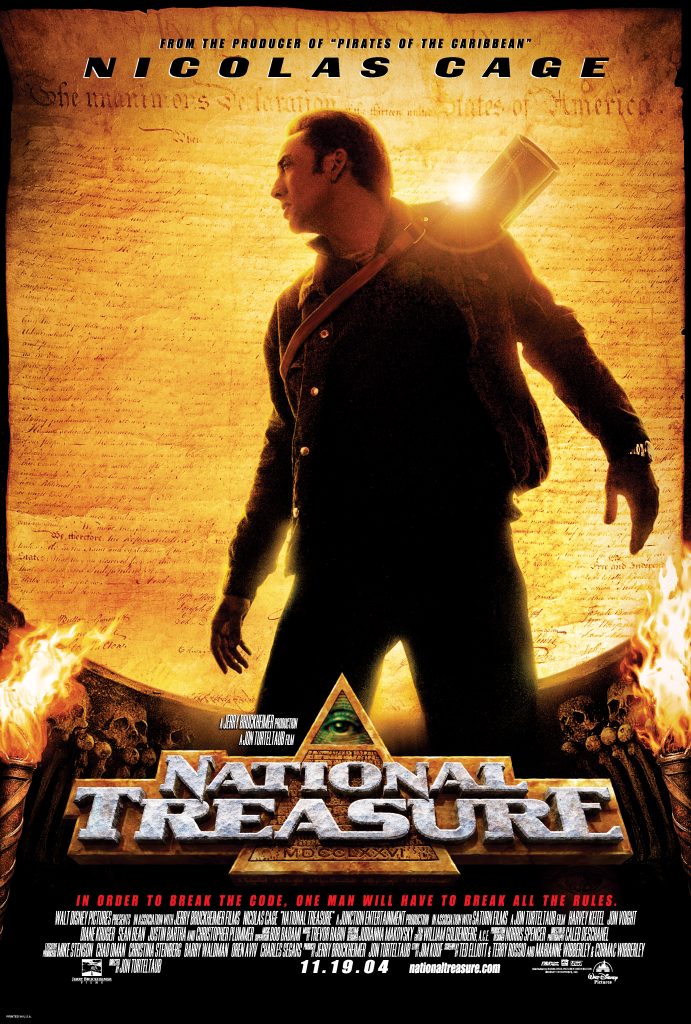
Ever since he was a boy, Ben Gates has been obsessed with finding the legendary Knights Templar Treasure, the greatest fortune known to man. As Gates tries to find and decipher ancient riddles that will lead him to it, he’s dogged by a ruthless enemy who wants the riches for himself. Now in a race against time, Gates must steal one of America’s most sacred and guarded documents — the Declaration of Independence — or let it, and a key clue to the mystery, fall into dangerous hands.
A Living Story, Still Being Written
Whether through the Disneyland concept portfolio, the flag flown at Walt Disney World, or the Declaration of Independence from National Treasure, Disney has repeatedly created ways for audiences to encounter history.
“In the balance between preservation and imagination, Disney has helped shape how generations of people encounter, understand, and continue to engage with the ideals of the American experience,” Cline said.