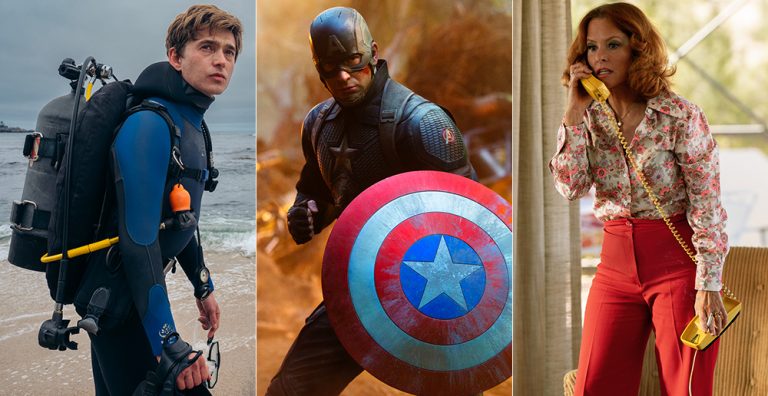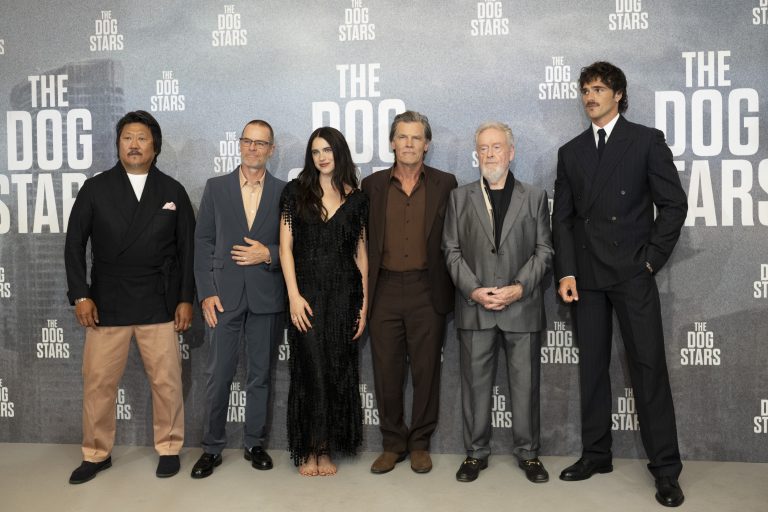
A year after losing his father, college student Jay Gardiner (Austin Abrams) returns home to Monterey, California, hoping to get some closure. Things were never easy between Jay and Mitt (Josh Brolin), a local diving legend, and Jay feels a strange mix of sorrow and relief. Hoping to recover his father’s remains, he suits up early one morning and dives off Monastery Beach. Out in the deep water, a sperm whale chasing a giant squid swallows Jay whole. With roughly an hour of air left in his tank, he starts to see that the tough lessons Mitt taught him could be his way out. That’s the premise of 20th Century Studios’ Whalefall, an emotional thriller from director, co-writer, and producer Brian Duffield, adapted from the novel by Pulitzer Prize winner Daniel Kraus, who also co-wrote the film.
A Whale of a Tale
Kraus got the idea for his novel after watching a viral video of two kayakers who nearly wound up inside a humpback whale’s mouth. He wondered whether that was really possible, so he spent weeks researching and talking to scientists about sperm whales. Once they confirmed it could happen, however unlikely, Kraus began writing his novel. After finishing the manuscript, he sent a copy of it to Duffield, a social media acquaintance. The book was published in 2023, and the award-wining production company Imagine Entertainment acquired the rights. Then, Duffield and Kraus began drafting the screenplay.
Adapting a story that lives largely inside Jay’s head was their biggest challenge.
“A lot of the book is very internal, in terms of Jay figuring things out and recalling different bits from his life,” Duffield said. “Our job was to make it as external as possible. The best part of doing an adaptation is trying to recapture the feeling you have while reading the book.”
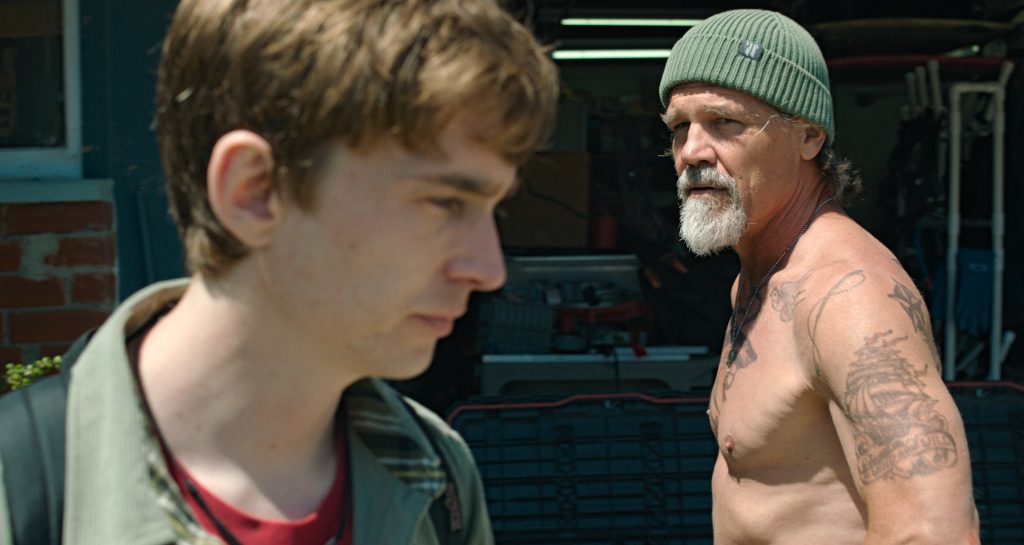
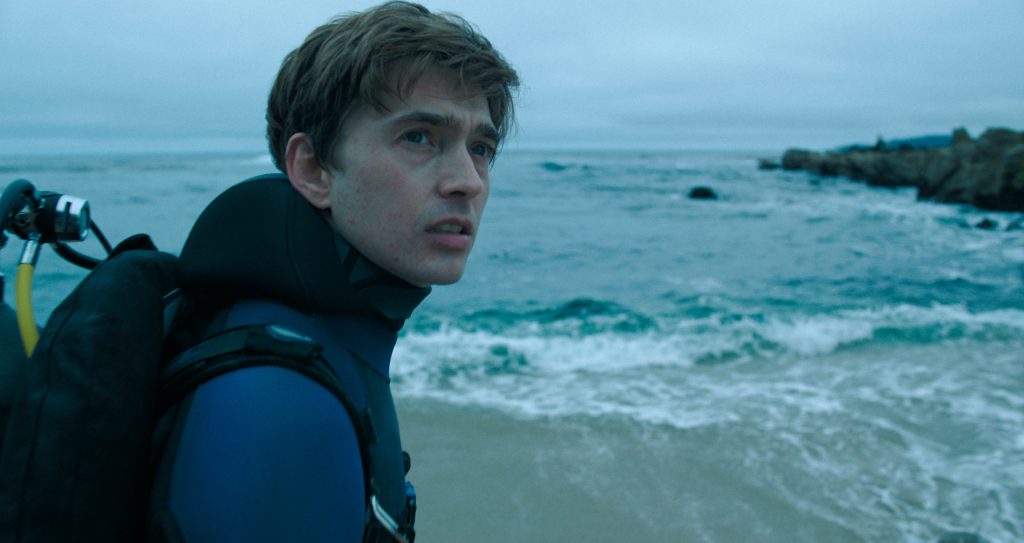
Working with the author made that possible. “I was so lucky that I got to adapt it with Daniel,” Duffield said. “The movie becomes a tattoo on the book’s life going forward, so it was really important to me that the author is happy with how his work was handled.” He added, “I think that was really the trick in terms of the adaptation: using Daniel’s genius. I mean, he has a Pulitzer, for crying out loud! We weaponized that to make the movie as much of a ‘movie’ as it can be, while still retaining what was so special about the novel.”
For Kraus, what mattered most was the heart. “Whalefall has always been, from the get-go, a really pleasant surprise and anomaly,” he said. “A lot of the stuff I’ve written, mostly books in the past, have had a cynicism to them, which I think was well-earned. But with Whalefall, I turned over a new leaf. There is an optimism and a heart to it that caught me by surprise.”
Unlike Father, Unlike Son
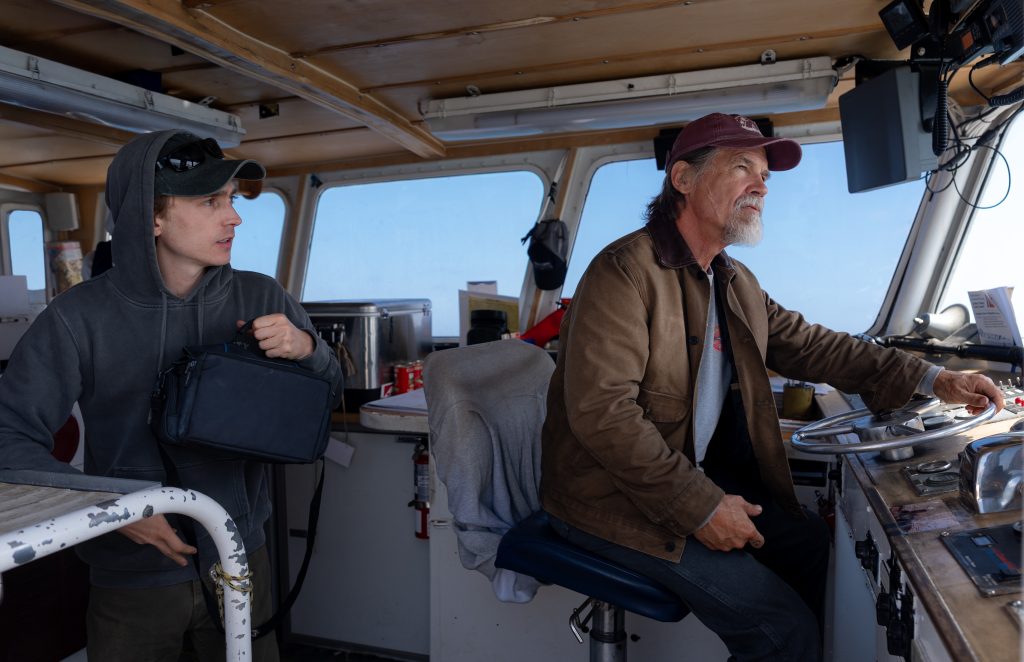
With Jay onscreen for most of the movie, finding the right actor was critical. The filmmakers auditioned hundreds of men between the ages of 18 and 27 before testing a handful and landing on Abrams. Brolin, an Academy Award® nominee, was cast as Mitt, a harsh, controlling patriarch who is also a revered local diver with a deep love of the ocean.
Brolin said he connected to the material right away. “I think it’s the same dynamic that everybody responds to: raising a child, or children; being the son of parents; and the hardships that they go through that you’re not sensitive to when you’re a kid,” he said. “And then also juggling and improvising through parenting. It was incredibly emotional to me, and I thought it was so well-written. I was so deeply affected by it when I read [the novel].”
Even with a complicated relationship, Jay can still hear his late father’s voice when he needs it most. “I think it’s unfinished business. When you listen to people who talk about near-death experiences, it’s not just fictional stories where people think about what they don’t have closure on,” Kraus said. “People really do think about that in those moments.”
Going into the Deep
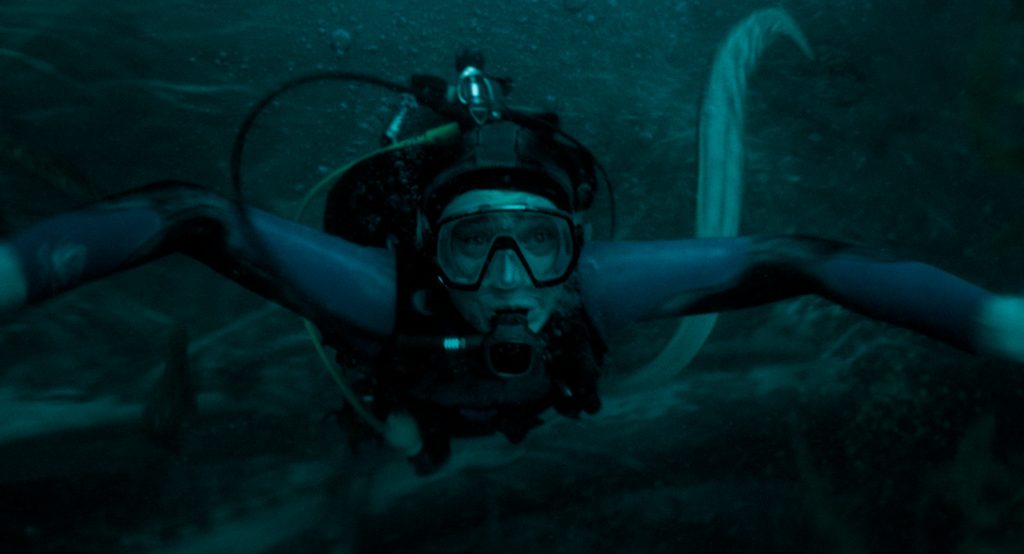
Abrams said the role was daunting, and that was the appeal. “It was, ‘I don’t know if I can take it on.’ That was the appealing part of it, because it’s rare that something comes along that is a completely new experience, not only for you but for everyone involved,” he said. “It’s an insane premise, but at the same time, Daniel’s done his research, so it’s technically possible, which I found really interesting. And then you have the emotional element that’s the heart of it.”
Abrams prepared by traveling to a sperm whale sanctuary off Dominica in the Caribbean, where he scuba-dived with whale documentarian Patrick Dykstra. Finding the whales was never a sure thing, but they did, and Dykstra believes the animals sensed Abrams’ sincere curiosity. At home, Abrams trained by strolling around his neighborhood in full scuba gear.
It’s rare that something comes along that is a completely new experience, not only for you but for everyone involved. It’s an insane premise, but at the same time, Daniel [Kraus] has done his research, so it’s technically possible, which I found really interesting. And then you have the emotional element that’s the heart of it.
Rooted in Science
To keep the wildest moments believable, Duffield and Kraus worked with whale anatomist Dr. Joy Reidenberg, who had already tutored Kraus during his research. The sperm whale was the logical choice for the story because of what it eats. The team then dug into the whale’s multi-part digestive tract, how stomach acid would affect Jay, and whether his dive gear would hold up. Wētā Workshop joined early to figure out which materials could bring the whale’s insides to life.
Kraus said the whale itself is part of the story’s power. “Sperm whales are the strangest creature on Earth, and one of the most mysterious,” he said. “Even these experts I worked with, who know more about sperm whales than anyone else around, would stop in their tracks every once in a while and say, ‘I don’t know how to answer this question. Nobody has figured this out yet.’ If you look at it wrong, it is a monster, but it’s also a beautiful angel in a lot of ways.”
A Faithful Adaptation
Whalefall was filmed on location in California, including around Catalina Island, Monterey, and San Pedro, as well as on soundstages in Studio City. Duffield wanted the movie to stay true to the novel, so the crew shot at the book’s settings whenever possible. Monastery Beach, a notoriously severe spot for divers in Carmel, stood in for Jay’s fateful first plunge.
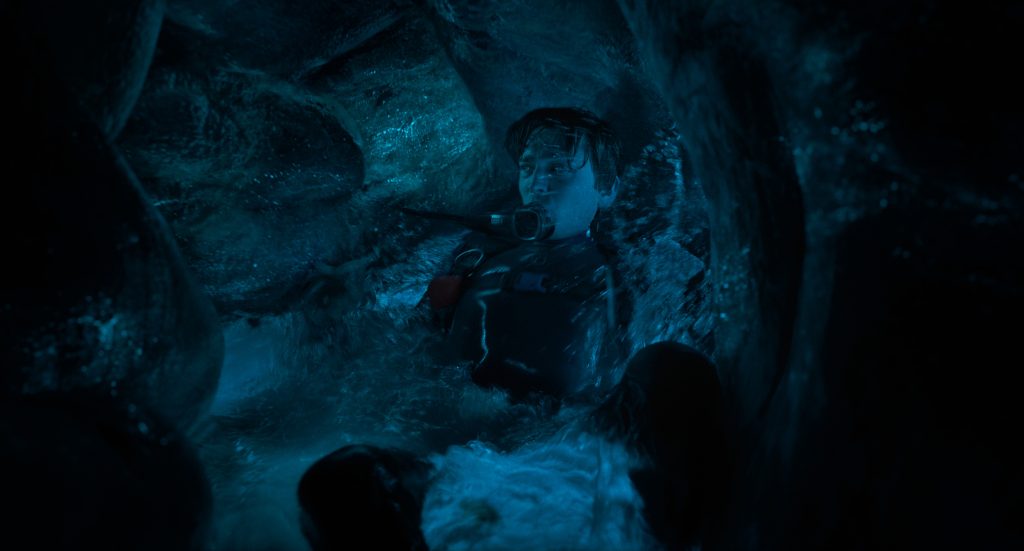
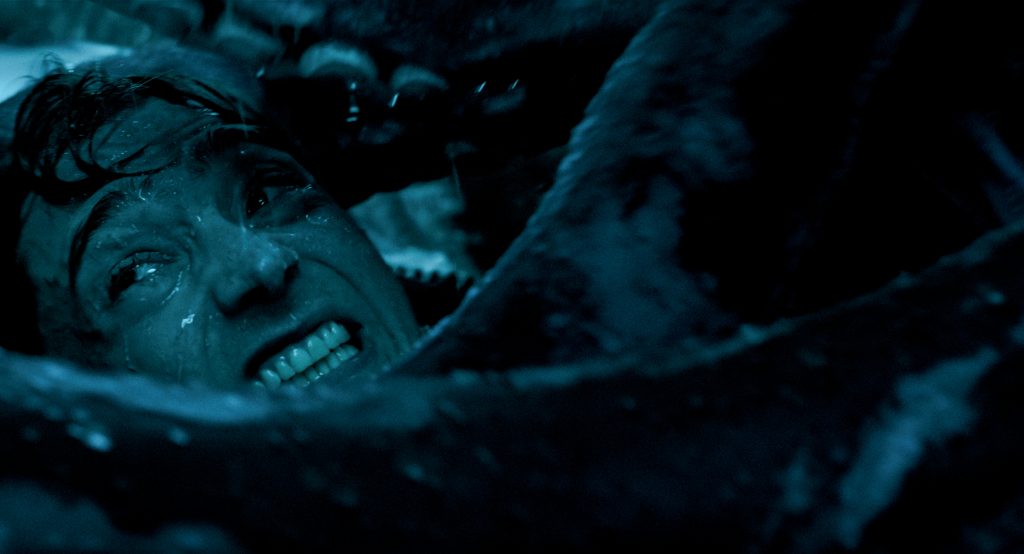
For the constructed set inside the whale’s stomach, the filmmakers kept things compact. “We had very realistic sets, and they’re not bigger than they appear in the movie, so he’s pretty tight in there the whole time,” Duffield said. “The claustrophobia was never something we had to worry about. He’s really locked in this weird ‘egg’ the whole time.”
The challenge was finding room to breathe. “It was finding other moments where he can take a little bit of a breather, a reset, just so we’re not constantly going down a roller coaster. We’re having some of those slowdowns before things ramp up again, so that when they do ramp up, they hit that much harder,” Duffield said. “Then, when the next terrible thing happens to him, it’s a little more jarring than if he was just screaming for 90 minutes.”
The cast and crew shot the stomach sequences in order, which Abrams said was an important part of getting into Jay’s mindset. “It helped when it came to telling the story, just to understand where you just were, rather than coming in on a different day and doing a totally different part of it, which I think would have made things even more challenging,” he said. “You shoot in order, so you’re able to feel the oscillation of where you need to go.”
Made for Movie Theaters
According to Abrams, Whalefall is best experienced on a big screen.
“It’s the visuals and the sound. The sound is really engrossing,” the actor said. “It’s a movie that people haven’t seen before. That’s a rare thing nowadays, which is also what drew me to it, personally. It’s a very immersive experience, and that’s why, for me, I think it’s worth it.”