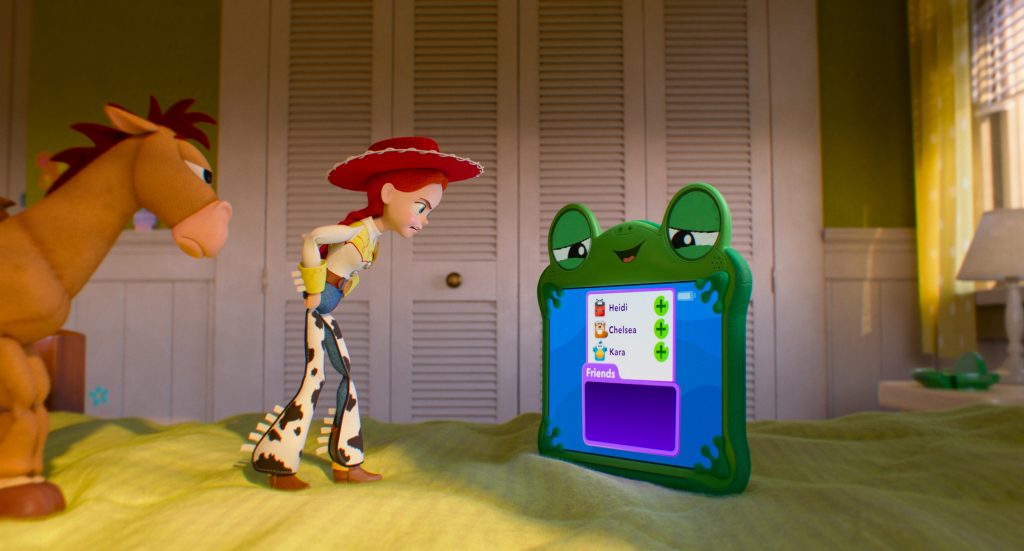
Chockfull of the franchise’s trademark heart and humor, Disney and Pixar‘s Toy Story 5, which hits theaters on June 19, explores how Woody (voiced by Tom Hanks), Buzz Lightyear (voiced by Disney Legend Tim Allen), Jessie (voiced by Joan Cusack), and the rest of the toys adapt to the rise of technology after Bonnie (voiced by Scarlett Spears) becomes engrossed with Lilypad (voiced by Greta Lee), a tablet device with her own ideas about what is best for their kid.
“From the beginning, we knew we wanted to include tech,” co-director Kenna Harris, who wrote the screenplay with director Andrew Stanton, said. “How would the toys feel about a device in their room? What started as a binary good vs. evil story morphed over time, because tech isn’t going away. So, what does that mean? The toys are probably stuck with Lilypad. As we thought about what that conflict could look like, it turned into a fun movie.”
Jessie Saddles Up
Jessie — the rootin’-tootin’ cowgirl introduced in 1999’s Toy Story 2 — now leads Bonnie’s room. But, after Lilypad’s arrival, she begins to question what it means to matter to her kid.
“Jessie loves Bonnie and wants the best for her,” Cusack said. “Her job is to make sure Bonnie is happy. Jessie pays attention, and she is fearless about making sure that happens.”
But even Jessie will admit it can be hard to compete with a high-tech smart tablet like Lilypad. After all, Lilypad is always several steps ahead of the traditional toys and has her own way of helping Bonnie connect with new friends — chatting with them on “The Pond.”
This isn’t Jessie’s first rodeo, of course — and she has two experienced toys in her corner. Ever in love with Jessie, Buzz now serves as her dutiful deputy. Woody, meanwhile, gets a surprise call during a harrowing toy-rescue mission that brings him back to Bonnie’s room.
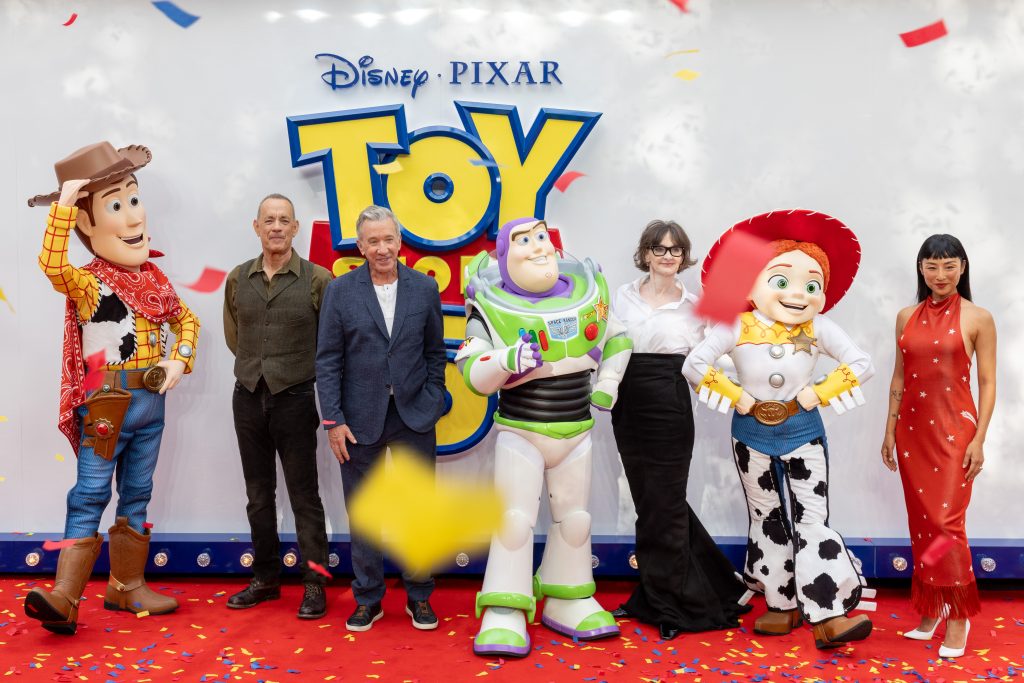
“I like the fact that we’re teaming up to help Jessie,” Allen said. “This is Jessie’s story… It isn’t about us. We are working together for Jessie’s good — and for Bonnie’s.”
Hanks added, “Bonnie is losing her sense of play. That rattles everybody: ‘No, we cannot allow that.’ There is a moment where Bonnie’s feelings are hurt — her ‘friends’ text about her — that, to me, is prescient to modern day. It’s a part of the human condition, writ large, in this movie about toys that are rushing to save the day. You can’t get better than that.”
More than three decades after Toy Story was released and reshaped the future of animation, Hanks added that the notion of exploring something topical, such as “the battle against tech,” was especially enticing. “The difference between being engaged in tech or playing with toys is as different as — I don’t know, apples and doorknobs,” Hanks said. “There’s no comparison.”
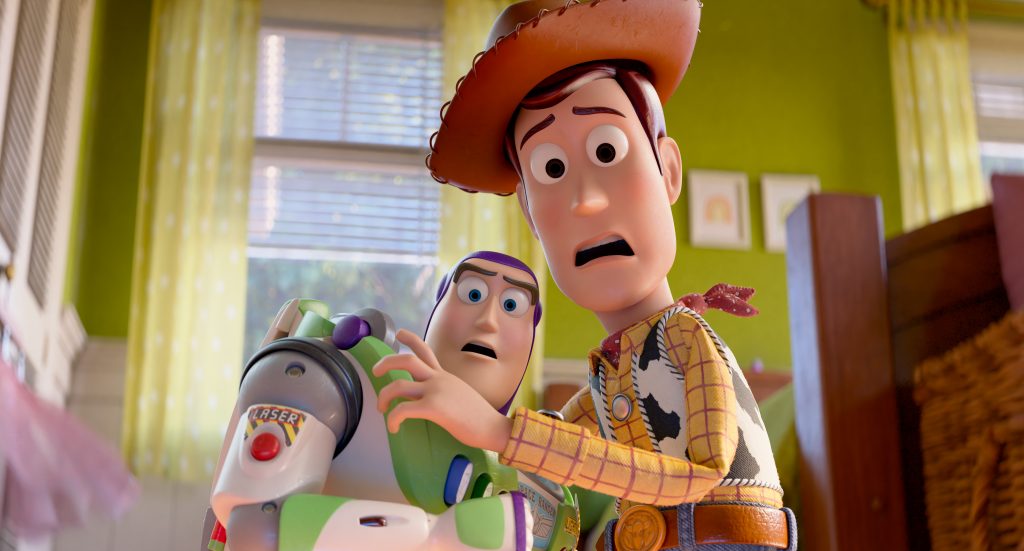
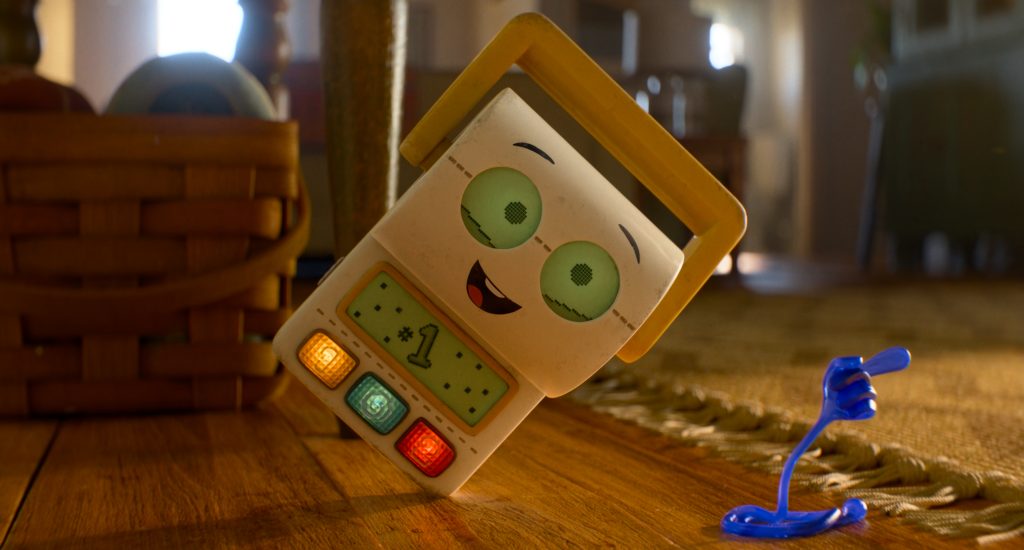
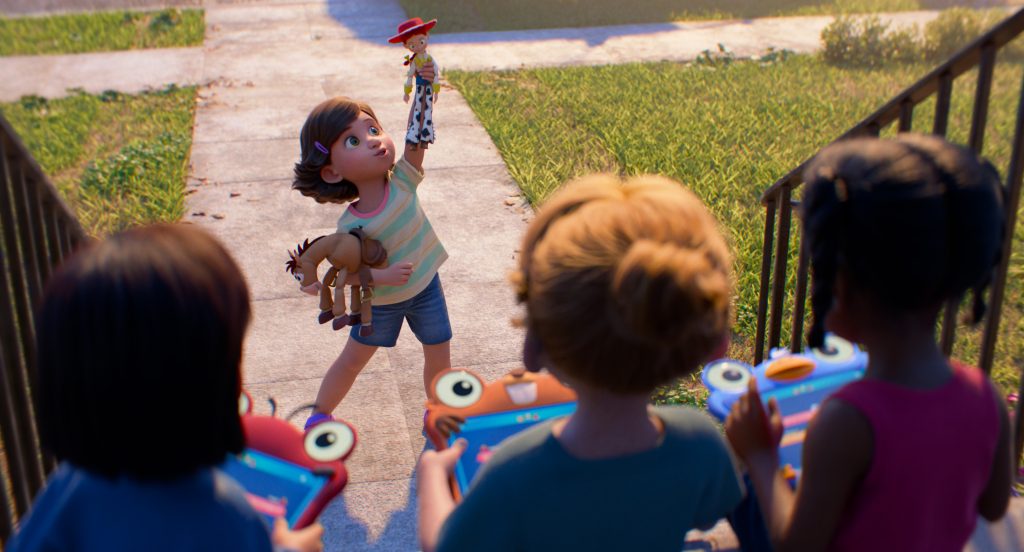
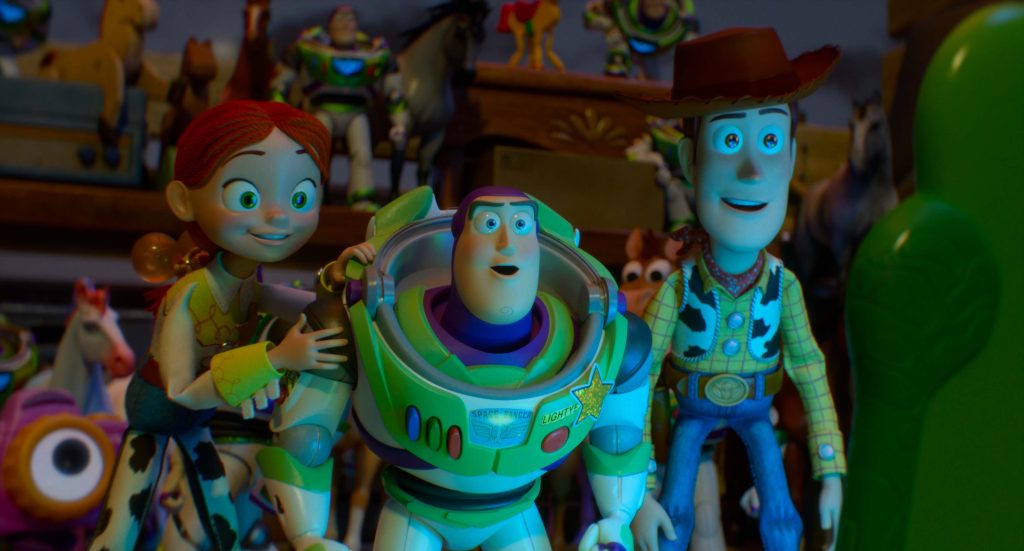
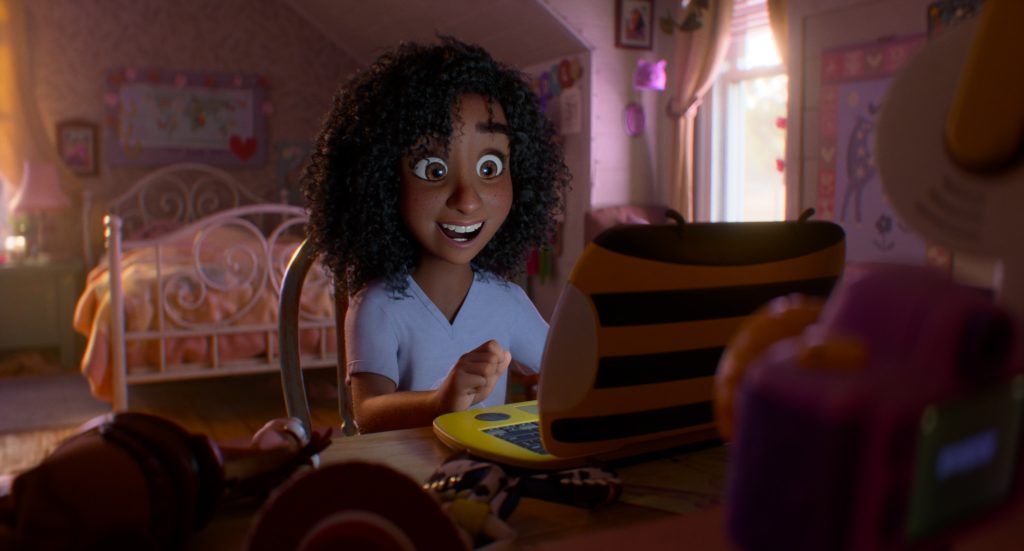
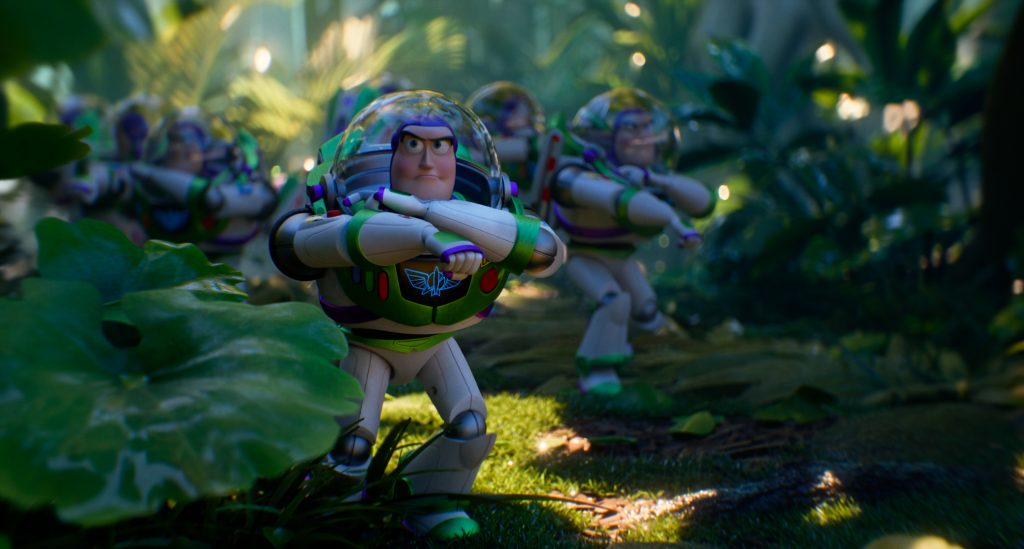
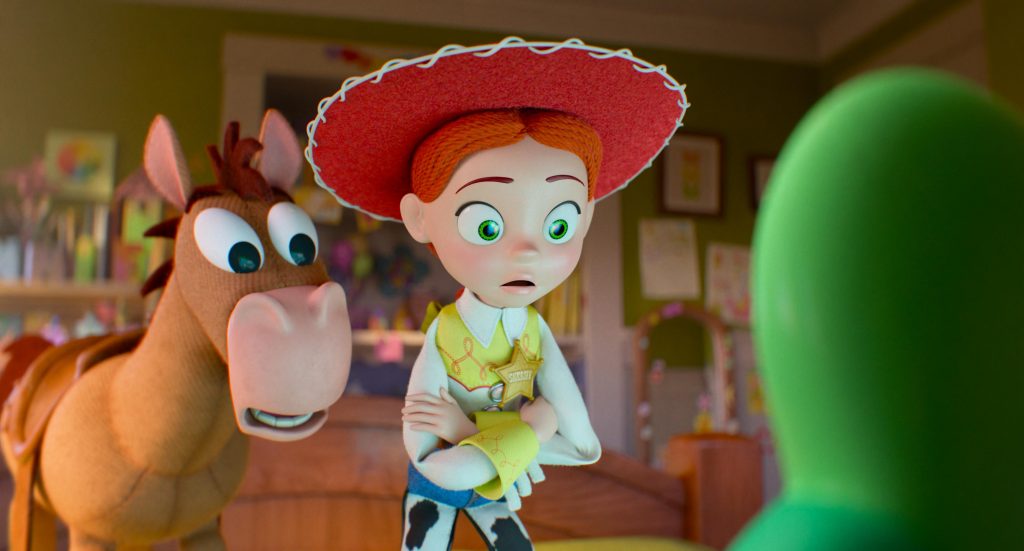
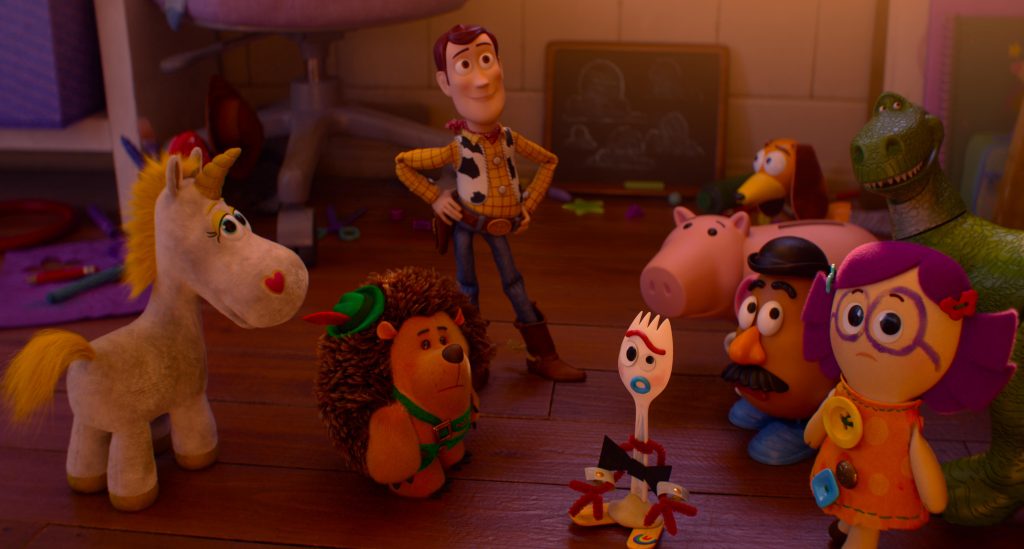
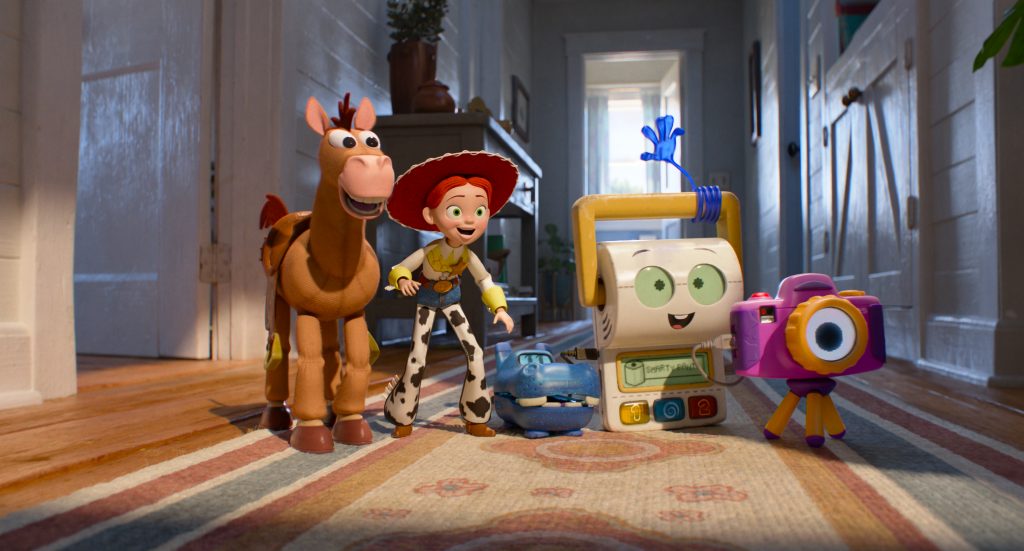
Toy Story 5 focuses on an aspect of childhood that Pixar had yet to explore — a time in which children gravitate towards screens and make less time for imaginative play with toys.
“Can’t we all relate?” Lee asked. “Whether you have kids or not, just living in this modern world, you feel like, ‘I have to optimize. I have to achieve. I have to be ever more efficient…’ I do hope that kids and parents and adults remember how important actual human connection is. There really is nothing better than that, at the end of the day. There are all these shortcuts that can help you make connections and friends, but sharing a real laugh with someone in person is so important. It seems almost silly to say that we need to remember that, but in the movie, you see these girls on a group chain laughing at a joke by hitting the ‘ha-ha’ button. How sad is it that a young kid is used to recognizing something is funny by pushing a button and saying ‘that’s funny’ instead of having a full-body Jessie laugh? I hope this movie reminds people to go out, laugh, make friends, and find real joy.”
Toys Meet Tech
According to Stanton, the Toy Story franchise — which has received 11 Academy Award® nominations and won four Oscars® — has a “unique” ability to grow along with its audience.
“When we made Toy Story 2, we realized we could just let life progress,” said Stanton, who is now Vice President, Creative, at Pixar Animation Studios. “By the time we let Andy grow up and go to college in Toy Story 3, we realized the toys don’t age, but the kids do. These movies move along in parallel [to the audience] — maybe not exactly in real time, but you have a different point of view in life, and things have changed for you. So, when you watch these movies, it’s changed for Andy and Bonnie, too. The toys are the observers of all that.”
I’m going to give some of the credit to technology advancing, but it’s been advanced for a while. We have the best lighters, the best cinematographers, the best artists, the best animators, the best layout people — it goes on and on. You’re seeing people at the top of their game after decades of doing the job. This is Olympic-level work.
Toy Story broke ground as the first fully computer-animated feature film in history. It became the highest-grossing release of 1995, earning $362 million worldwide and launching a franchise that spans consumer products, theme parks, and beyond. Toy Story 5 builds upon the established worldbuilding and visual design of the previous films, and the filmmakers were excited to push style choices to tell the most entertaining story possible.
“Computers have gotten a lot faster over the last 30 years, and the software has gotten much more complex, which allows us to do more things,” visual effects supervisor Thomas Jordan said. “But more importantly, the animation system we use is friendlier for artists. They don’t need computer backgrounds, because the tools are much easier and accessible.”
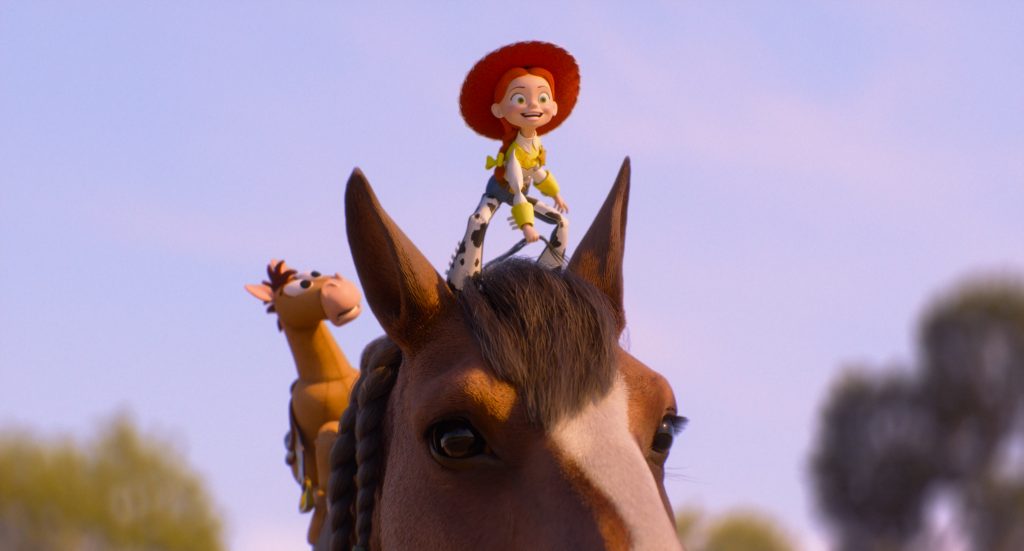
For example, filmmakers estimate that Pixar’s render farm is at least 12,000 times more powerful today than it was when they made the first film. As a result, animators can now create sequences that are as visually powerful as they are technically complex — such as the sequence in Toy Story 5 when Jessie and Bullseye ride an actual horse named Daffodil.
“Daffodil is a very complicated character, because she has the anatomy of a real horse,” Jordan said. “As Daffodil is running, Jessie is holding onto Daffodil’s mane, and Bullseye is holding onto Jessie’s foot. It is the most complicated motion, I think, of any shot we have in the entire film — and it goes by in a flash! But it really elevates the excitement in the film.”
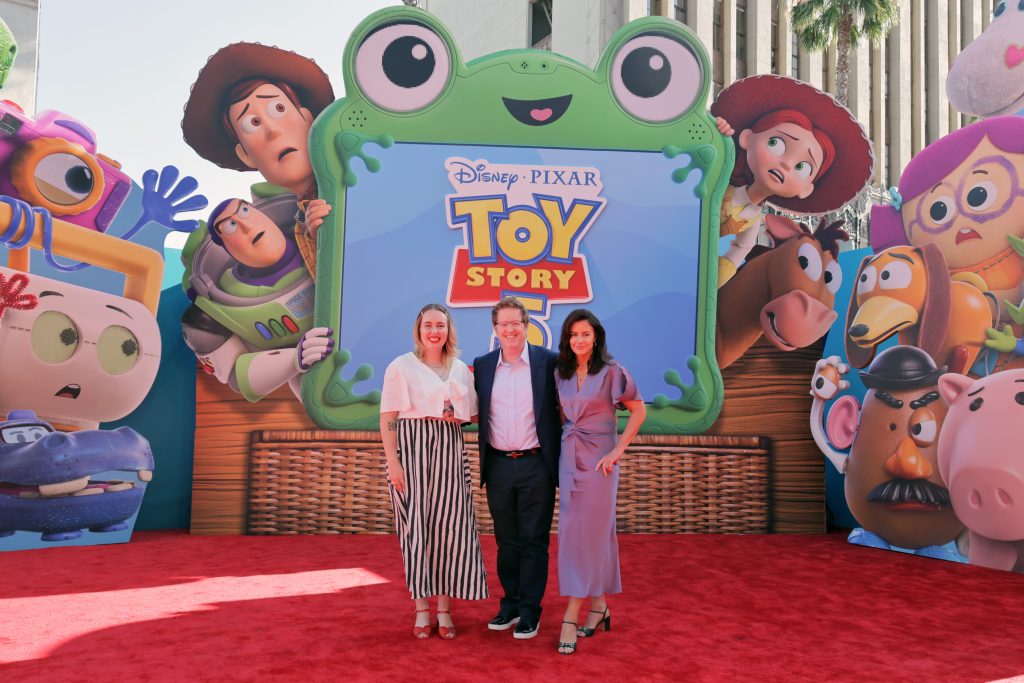
However, producer Lindsey Collins said it’s important to exercise “restraint” in a franchise as storied as Toy Story. “It’s this delicate magic trick. We don’t want to suddenly make the movie look like this like shiny new toy, so to speak. We don’t want it to feel as though you’re watching a movie that isn’t set amongst these movies that we’ve all known for the last 31 years. But we’re also using the next generation of technology. It’s a tricky balance.”
“I’m going to give some of the credit to technology advancing, but it’s been advanced for a while,” Stanton added. “We have the best lighters, the best cinematographers, the best artists, the best animators, the best layout people — it goes on and on. You’re seeing people at the top of their game after decades of doing the job. This is Olympic-level work.”